
Translation Is Not International SEO: Fix the Architecture Before You Localize
A company can translate fifty pages perfectly and still launch an international site that search engines struggle to understand.
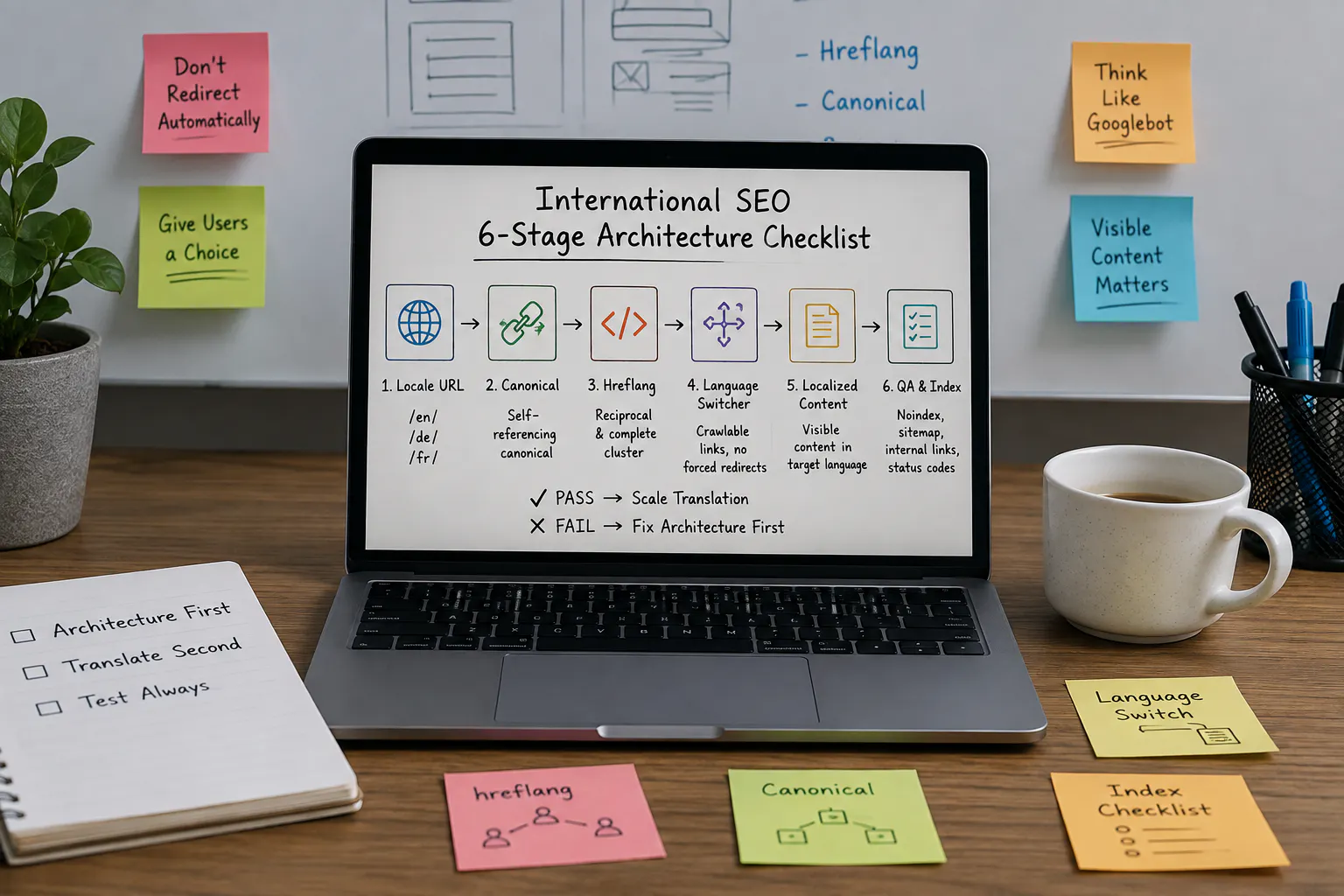
The reason is simple: translation changes content, but international SEO also depends on architecture. Search engines need stable locale URLs, consistent canonical signals, discoverable language alternatives, crawlable navigation, and pages whose visible content clearly belongs to the intended language or region.
That makes the order of operations important. If a team translates first and designs the international structure later, it may end up remapping URLs, repairing canonicals, rebuilding hreflang clusters, and reworking internal links after launch.
A better approach is to treat localization as a technical release. Before scaling translation, pass each planned locale through six architecture gates.
The Failure Mode: Translation Before Addressability
Consider a hypothetical industrial manufacturer with an English site at:
https://example.com/products/hydraulic-breaker/
The company wants German and French versions. The fastest implementation may seem to be a language...
Copyright of this story solely belongs to hackernoon.com. To see the full text click HERE