
Migrating From UIKit to SwiftUI in Large Production Apps
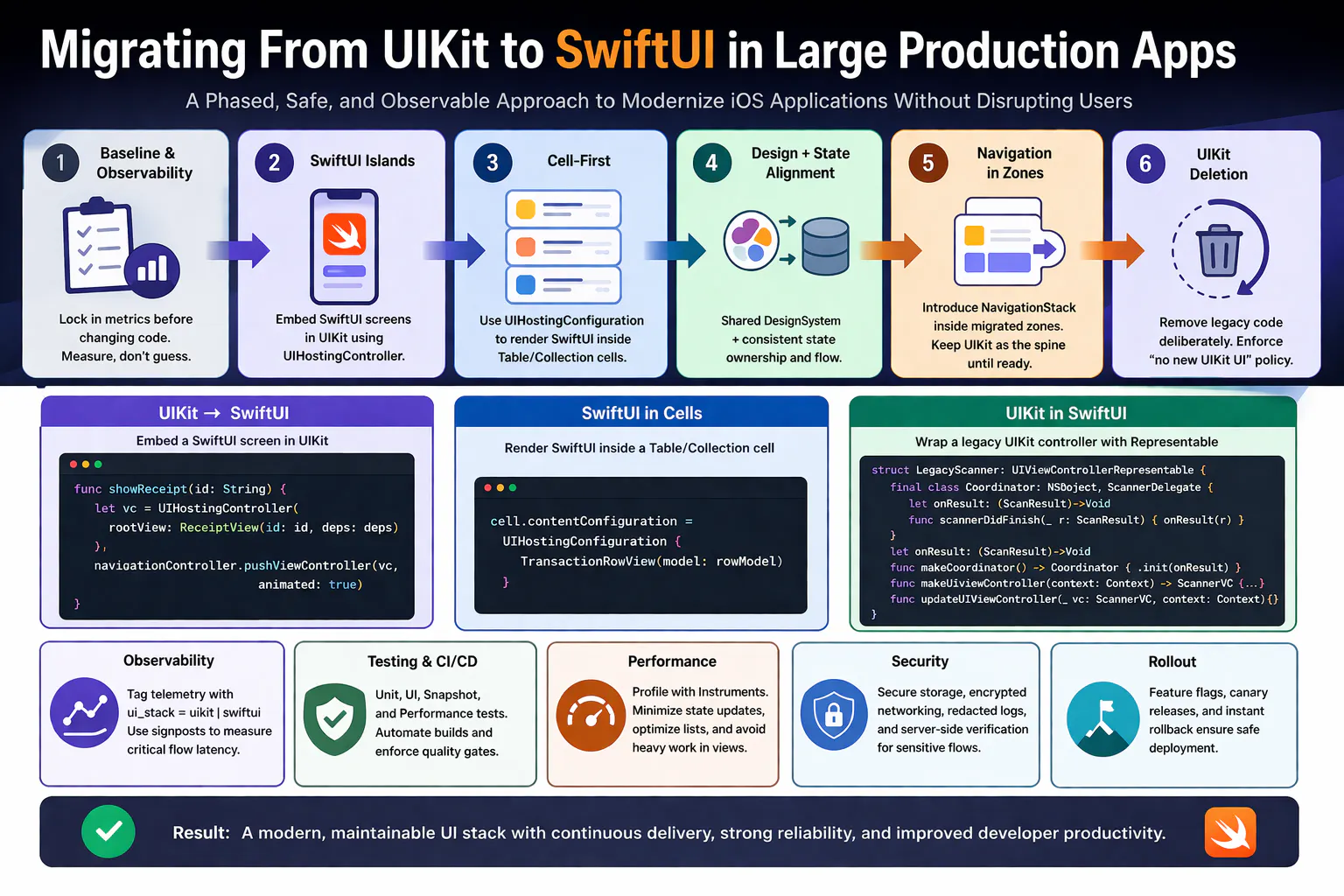
Modern iOS applications that have evolved over multiple years often accumulate complex UI layers, deeply integrated analytics, and carefully tuned performance optimizations. These applications typically rely on UIKit as the foundational framework, making any transition to SwiftUI a non-trivial architectural decision. SwiftUI introduces a declarative paradigm that improves developer productivity and maintainability, but migrating large production systems requires careful orchestration to avoid regressions in performance, reliability, and user experience. A structured migration approach becomes essential when the goal is continuous delivery without disrupting existing functionality.
A migration strategy that attempts to replace UIKit entirely in a single step tends to introduce significant risk. Large-scale rewrites often fail due to loss of operational visibility, increased defect surface area, and delays in feature delivery. Incremental adoption provides a more controlled path, allowing SwiftUI to coexist with UIKit while gradually replacing components. This coexistence is enabled by Apple-provided interoperability layers such as UIHostingController...
Copyright of this story solely belongs to hackernoon.com. To see the full text click HERE