How Shallow and Deep Copies Work in Python
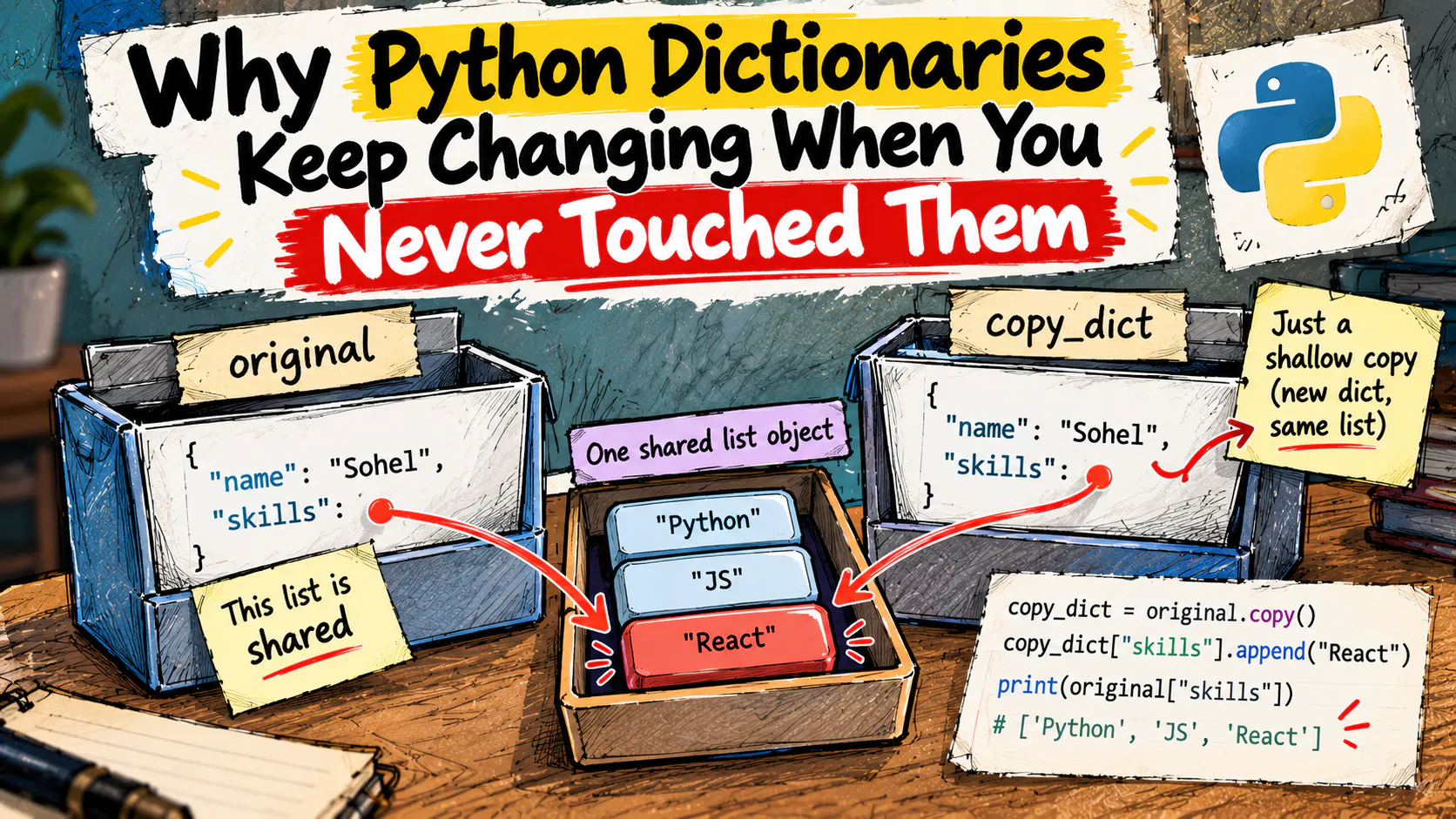
A few weeks ago I was testing a small feature nothing fancy, just duplicating a dictionary before running an update, the way you're taught to "be safe." I only touched the copy. And somehow, the original changed too. I hadn't touched it. I hadn't reassigned it. It just changed.
It wasn't a Python bug. It was something I'd been getting wrong without realizing it: a variable doesn't hold an object it holds a reference to one. Once that clicked, this entire category of "silent" bugs stopped feeling random.
What You Expect
original = {"name": "Sohel", "skills": ["Python", "JS"]}copy_dict = original.copy()copy_dict["skills"].append("React")print(original["skills"])
You'd expect this to print:
['Python', 'JS']
You made a copy. You only modified the copy. The original should be untouched, right?
What Actually Happens
['Python', 'JS', 'React']
The original dictionary changed even though you never touched original directly. You only touched copy_dict.
First, There's Not Always a Copy at...
Copyright of this story solely belongs to hackernoon.com. To see the full text click HERE