

From Python Script Hell to a Modern Data Integration Framework
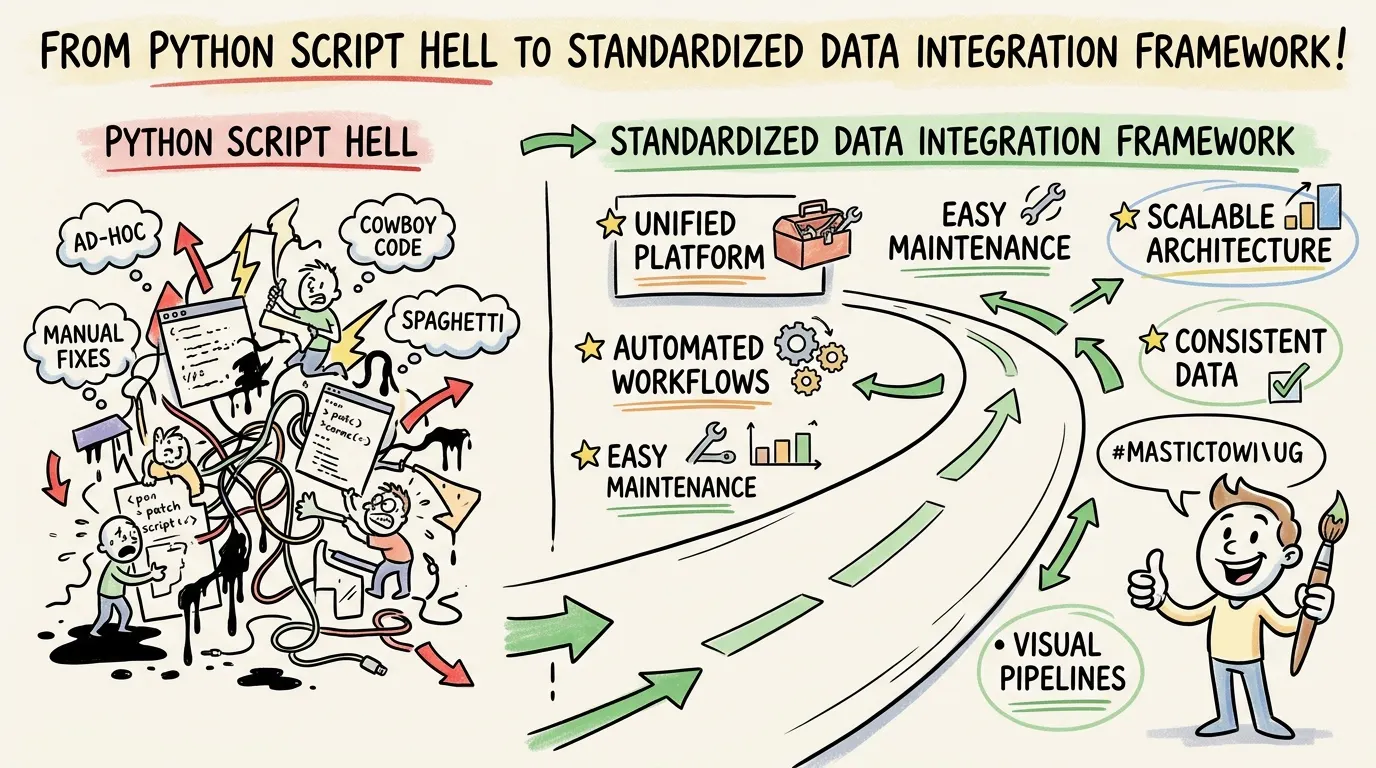
Every Data Team Eventually Ends Up with a Collection of Python Scripts
Almost every enterprise data platform follows a similar evolution.
At the beginning of a project, data ingestion requirements are usually straightforward. Business systems need to synchronize MySQL data into a data warehouse. Marketing teams want to retrieve campaign data from third-party REST APIs periodically. Logging systems consume real-time messages from Kafka before writing them into ClickHouse or Elasticsearch. For these scenarios, Python naturally becomes the preferred language for most data engineers because of its rich ecosystem and low development cost. With just a few dozen or a few hundred lines of code, a complete data synchronization task can be implemented.
At this stage, the approach works perfectly well. Development is fast, deployment is simple, and a new requirement usually means adding another Python file that can be delivered to production within a short time.
The real challenge emerges...
Copyright of this story solely belongs to hackernoon.com. To see the full text click HERE


