From crime labs to space rocks, NIST helps identify mystery chemicals
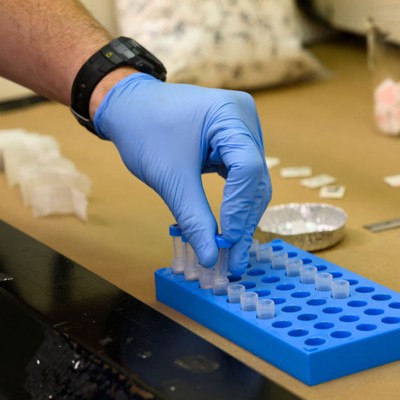
On television crime dramas, investigators often recover an unknown powder or residue, send it to a laboratory and learn exactly what it is before the next commercial break. The real science is slower and more complicated, but one part of that familiar plot device is very real.
Forensic scientists can run an unknown substance through a mass spectrometer, generate a distinctive chemical fingerprint and compare the result against an enormous reference library maintained by the National Institute of Standards and Technology.
NIST recently released a major update to that library, adding tens of thousands of compounds that researchers, manufacturers and forensic scientists can use to help identify mystery substances. The expanded collection includes chemical fingerprints associated with everything from synthetic opioids and environmental contaminants to compounds detected on Mars and organic material recovered from an asteroid.
Those fingerprints are formally known as mass spectra. To create one, a mass spectrometer...
Copyright of this story solely belongs to nextgov.com. To see the full text click HERE