Clean Architecture in Python: Building Maintainable APIs Without the Overkill
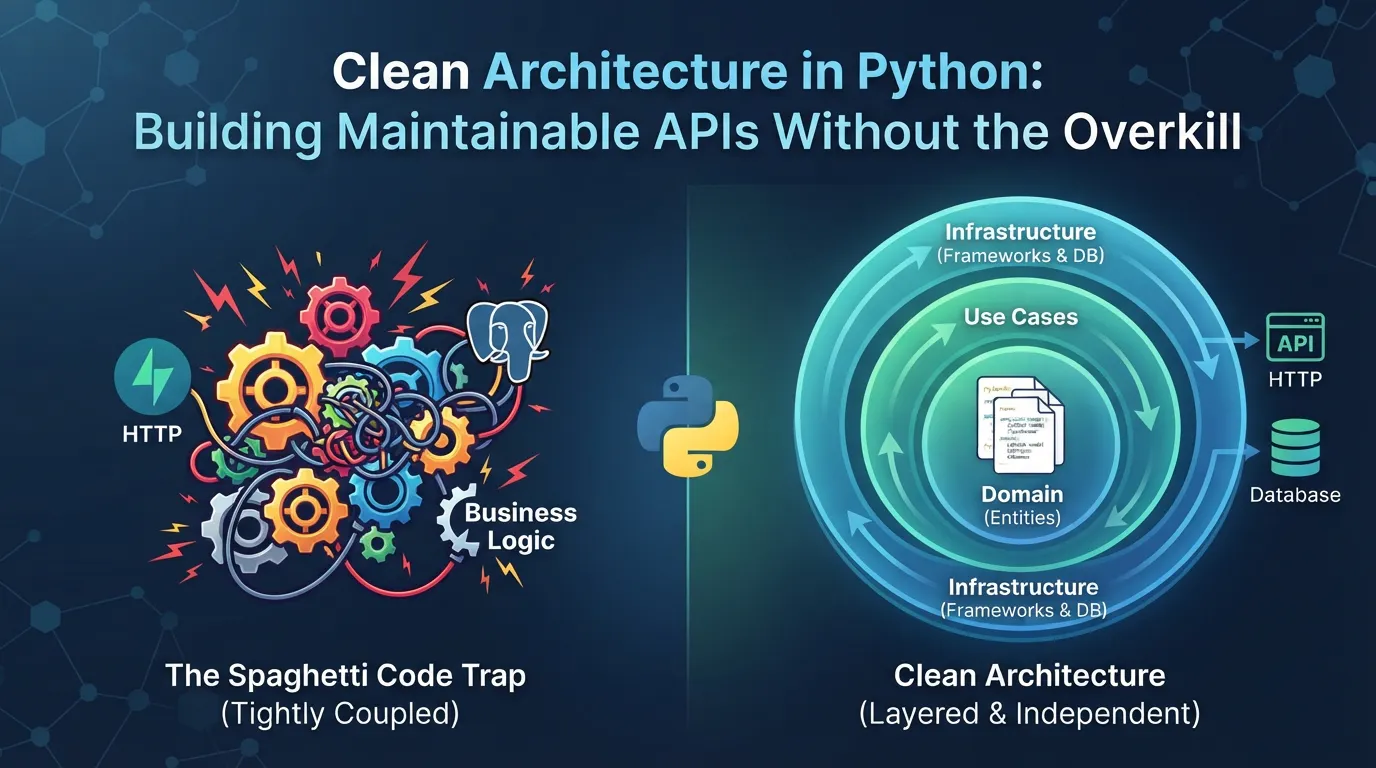
If you’ve ever inherited a Python backend built with FastAPI, Django, or Flask that grew past 50,000 lines of code, you know the dread. A request to change a database field cascades into modifying serializers, view functions, background workers, and unit tests. Everything is coupled to everything else.
To solve this, developers often discover Clean Architecture or Domain-Driven Design (DDD). They read about dependency inversion, entities, use cases, ports, and adapters. Excitedly, they dive in—and a week later, they’ve written 15 abstract base classes, 6 layers of data mapping, and custom DTOs just to save a single user record.
They wanted maintainability, but they got Enterprise Java-style boilerplate in Python.
You don’t need to drown in abstraction to write clean code. Here is how to implement practical Clean Architecture in Python to build maintainable APIs without the overkill.
Why Standard Python APIs Get Messy
In a typical framework-driven app,...
Copyright of this story solely belongs to hackernoon.com. To see the full text click HERE