
Your Multi-Agent System Is a Distributed System. Treat It Like One
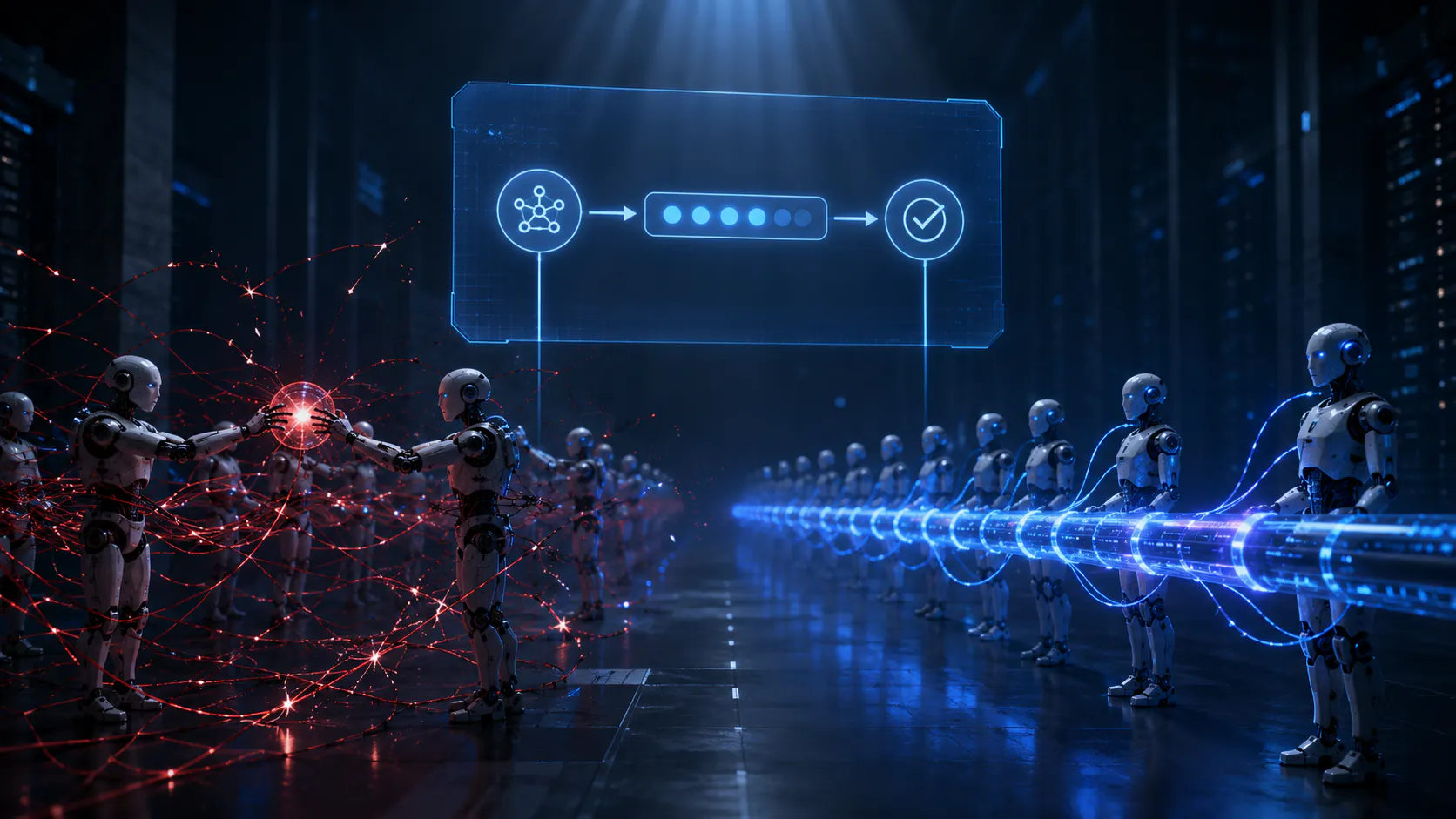
Agent swarms don't fail because the prompts are dumb. They fail because two agents both "succeeded," nobody was idempotent, and your customer got charged twice. These are 30-year-old bugs wearing a new hat.
In Short:
- A multi-agent system is a distributed system. The moment one agent calls another agent or a tool over a network, you inherit partial failure, retries, duplicate messages, and stale state — whether you planned for them or not.
- Teams treat agent coordination as a prompt-engineering problem. It isn't. No system prompt prevents a double charge when a retry re-fires a non-idempotent side effect.
- The fixes are boring and 30 years old: idempotency keys, a durable log between agents, timeouts with bounded retries and jitter, sagas with compensation, and an outbox/dedupe table.
- Treat every agent-to-tool and agent-to-agent call as an unreliable network call, because that's what it is. Plan for it to be lost, duplicated, delayed,...
Copyright of this story solely belongs to hackernoon.com. To see the full text click HERE