

Your Community's Moderation Bot Shouldn't Have a Single Point of Failure
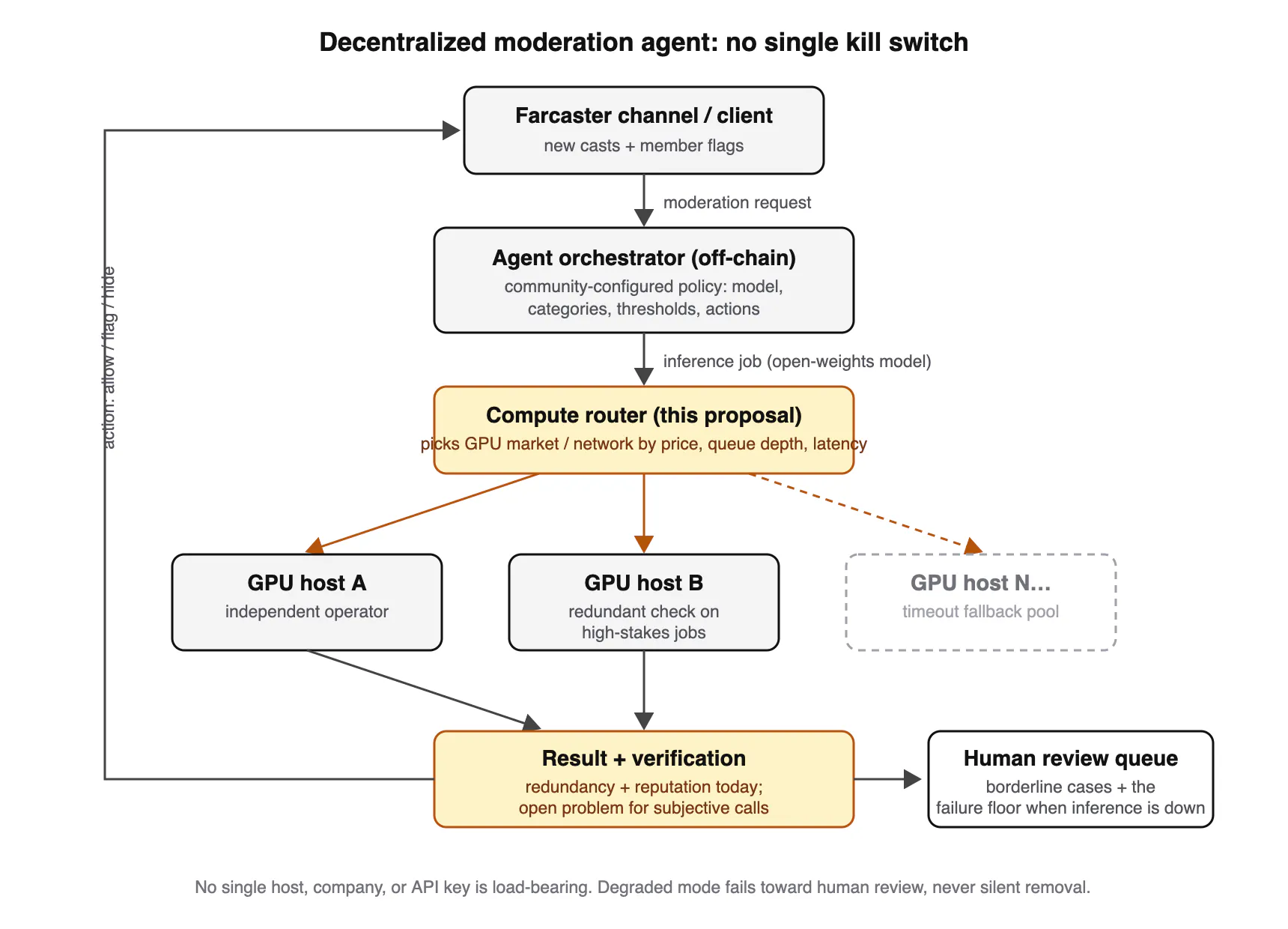
I write about and build for Farcaster communities, and there is a failure mode I keep running into. A channel grows past the point where humans can read everything. Someone builds a moderation agent to help. The agent works, the channel relaxes, and six months later the whole arrangement quietly depends on one company's API key, one company's terms of service, and one company's idea of what counts as acceptable content.
Nobody planned that. It just happens, because the easiest way to add intelligence to anything in 2026 is to call a centralized AI API. But for tooling that serves a permissionless social protocol, it produces a contradiction worth taking seriously: the social graph is permissionless by design, and the moderation layer sitting on top of it can be switched off by a single vendor.
This essay is an architecture proposal for fixing that specific contradiction. Not a claim that...
Copyright of this story solely belongs to hackernoon.com. To see the full text click HERE