

Why Your Rules Engine Deserves Its Own Kubernetes Node Pool
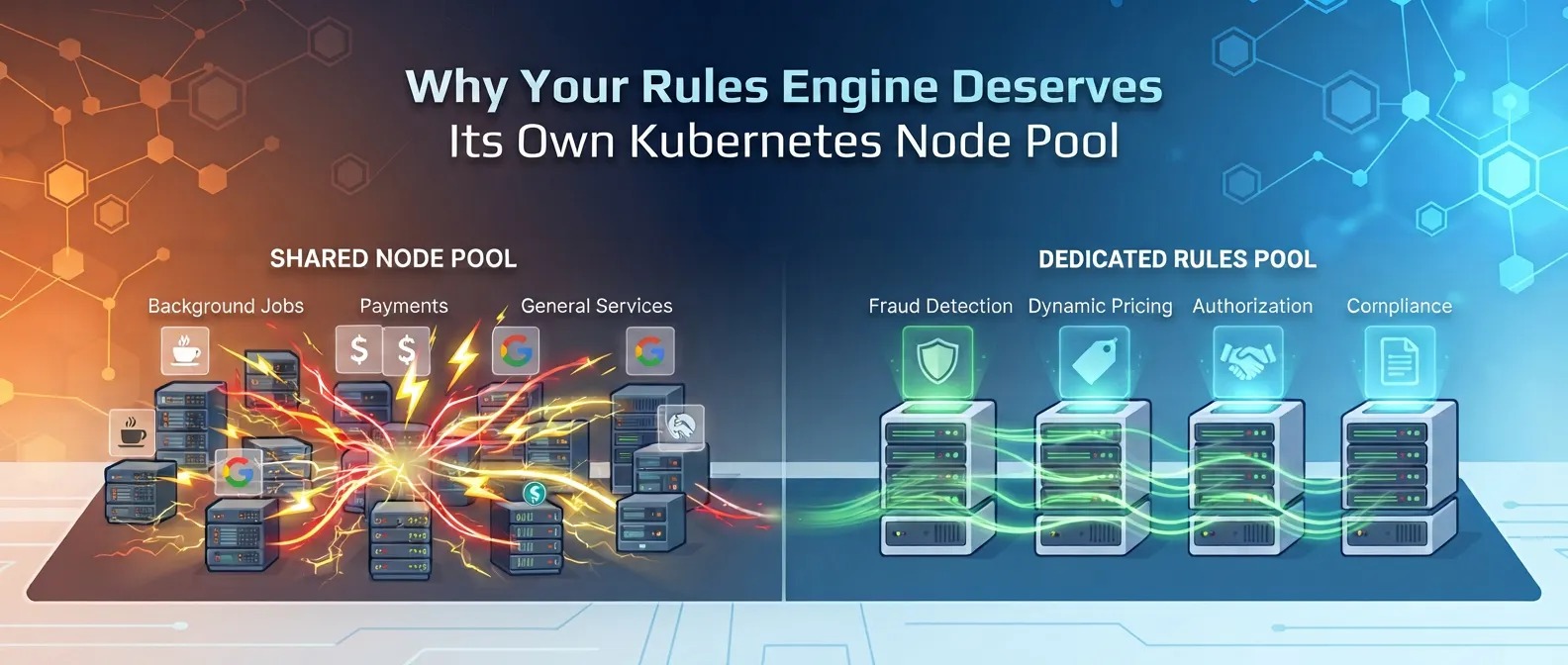
We treat our databases like crown jewels. We provision dedicated, high-IOPS storage, isolate them in private subnets, and fine-tune every kernel parameter. We isolate our message queues and caching layers to ensure throughput never blinks.
Yet, when it comes to the rules engine, the literal brain driving your dynamic pricing, real-time fraud detection, authorization policies, and compliance workflows , how do we treat it?
Too often, we pack it onto general-purpose Kubernetes node pools alongside marketing microservices, background cron jobs, and logging sidecars, crossing our fingers and hoping for the best.
If your rules engine is the gatekeeper of your business logic, it's time to give it first-class infrastructure. Here is why your rules engine deserves its own dedicated Kubernetes node pool.
Most Kubernetes clusters start simple: a single node pool handling everything. As you scale, you implement horizontal pod autoscaling (HPA), set resource requests and limits, and assume Kubernetes...
Copyright of this story solely belongs to hackernoon.com. To see the full text click HERE