

Why the Automotive Industry Loves Intelligent Part Numbers — And Why They Can Become a Trap
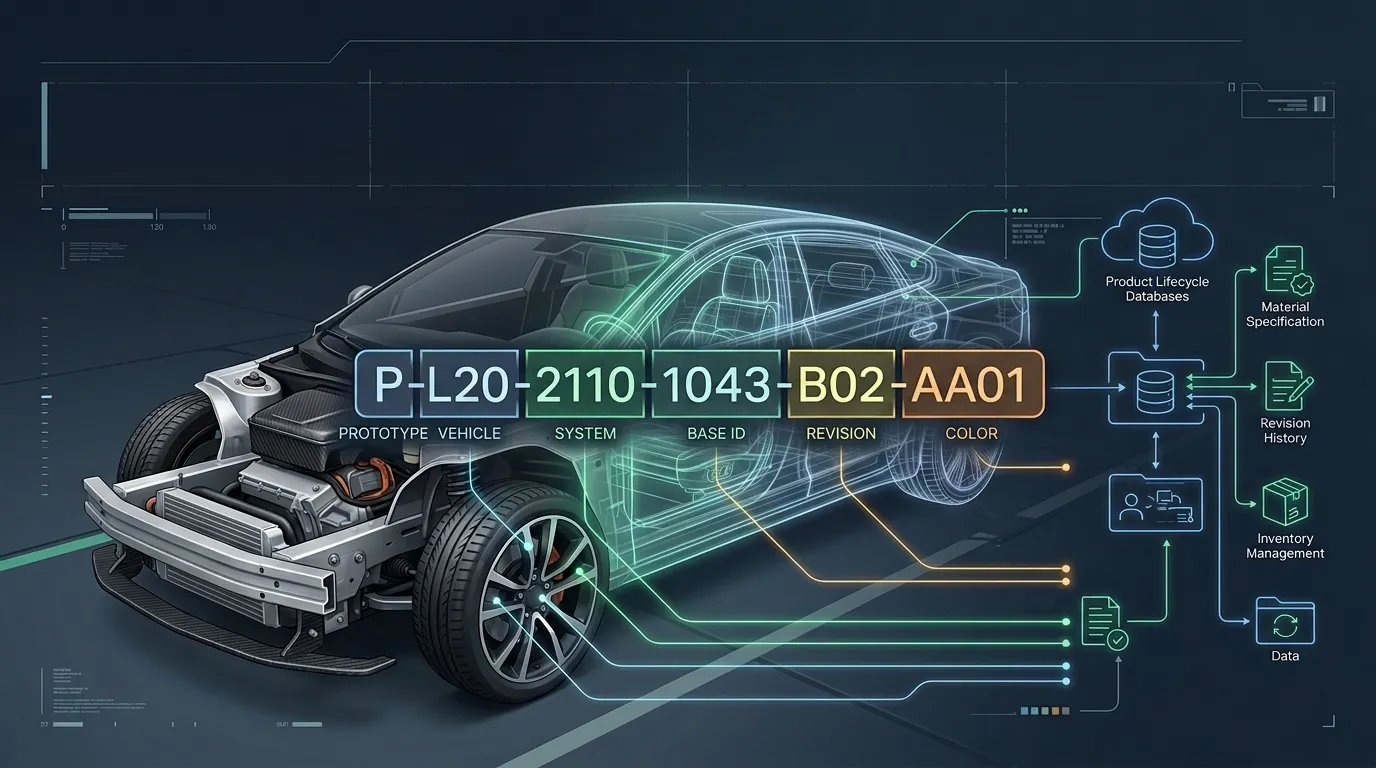
Walk onto the floor of any major auto plant or Tier-1 supplier and listen to how people talk. Engineers, quality leads, and line operators don't use full part descriptions. They speak in part-number shorthand:
"Check bin 4. Make sure we aren't putting a P-L20-3100-1011-A01 prototype bracket on a saleable chassis."
"Is that fascia color-neutral -0000 or is it the painted variant -AA01?"
A modern car packs more than 30,000 parts, from stamped steel body panels and seats down to battery cells and radar brackets. Keeping track of all of them from early CAD work to final assembly is one of the toughest jobs in Product Lifecycle Management (PLM) and Enterprise Resource Planning (ERP) \[1\].
For decades, carmakers have leaned on intelligent part numbers (often called smart or significantpart numbers) to keep that complexity straight. One look at a label tells a veteran engineer what the part is, where it...
Copyright of this story solely belongs to hackernoon.com. To see the full text click HERE