

Why AML Transaction Monitoring Fails When You Optimise for Volume Instead of Decisions
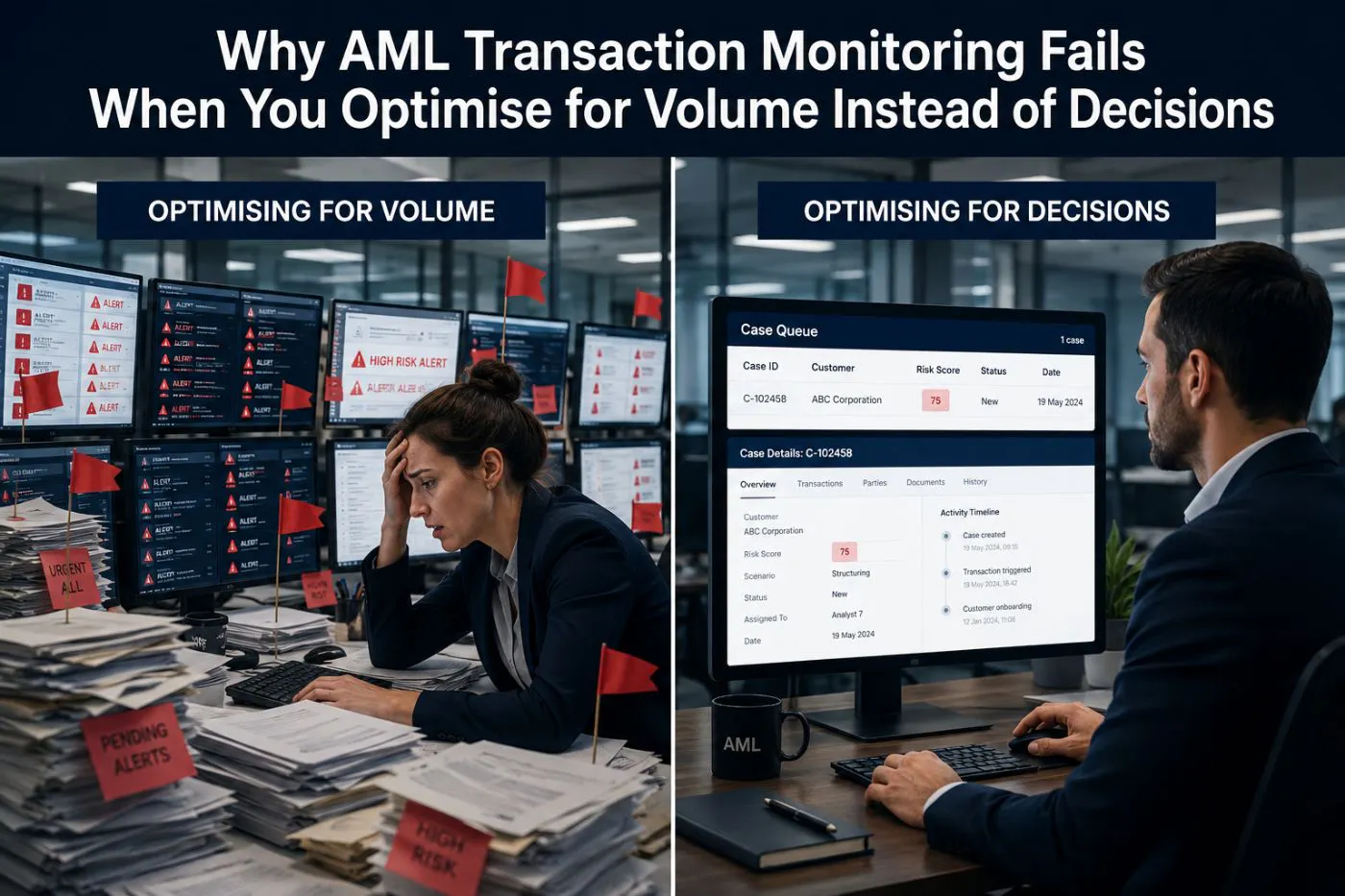
There is a number that sits at the centre of most AML operations, rarely challenged and almost never examined for what it actually means. Depending on the institution, somewhere between 90 and 99 percent of transaction monitoring alerts turn out to be false positives. Industry estimates, vendor benchmarks and regulatory commentary have converged on this range for years, and the vendors that sell transaction monitoring infrastructure have documented the same burden across their client portfolios.
The number is not contested. What is strange is how calmly the industry has absorbed it. Think about what that figure actually says. A function staffed with trained investigators, running models that took months to build and tune, generating hundreds or thousands of alerts per week, and somewhere between 90 and 99 percent of what it produces is noise. In almost any other operational context, that ratio would trigger a root-and-branch redesign. In AML, it...
Copyright of this story solely belongs to hackernoon.com. To see the full text click HERE