
When Old Workflows Meet New Code: Preventing Temporal Replay Failures in Production
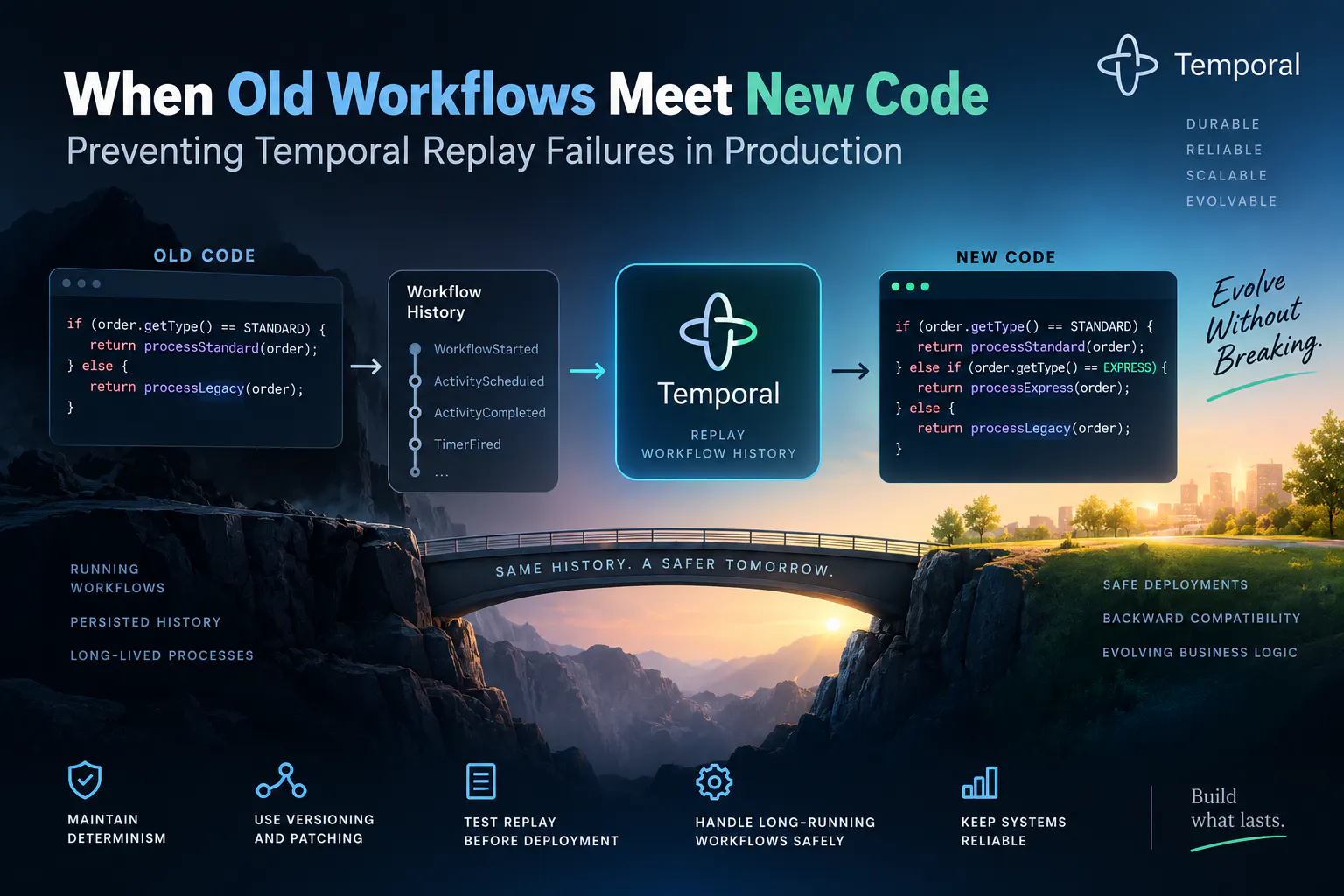
Temporal changes the meaning of deployment because a Workflow Execution can outlive the process and code revision that started it. The Temporal Service persists Event History, while Workers reconstruct Workflow state by replaying that history through Workflow code. A Worker released today may therefore execute against decisions recorded by an older revision. A change can compile, pass ordinary tests, and still become incompatible with existing history. Safe deployment requires treating Workflow code as a durable protocol whose command sequence must remain understandable across releases.
Replay Turns Code Into a Compatibility Contract
During execution, SDK calls that schedule Activities, start timers, or perform other durable operations produce Commands. The Temporal Service converts those Commands into Events and appends them to Event History. During replay, Workflow code runs again and the SDK checks whether newly produced Commands agree with recorded history. Activities are not re-executed merely because replay occurs as recorded results...
Copyright of this story solely belongs to hackernoon.com. To see the full text click HERE