

When an LLM Beats a Statistical Model, and When It Doesn't
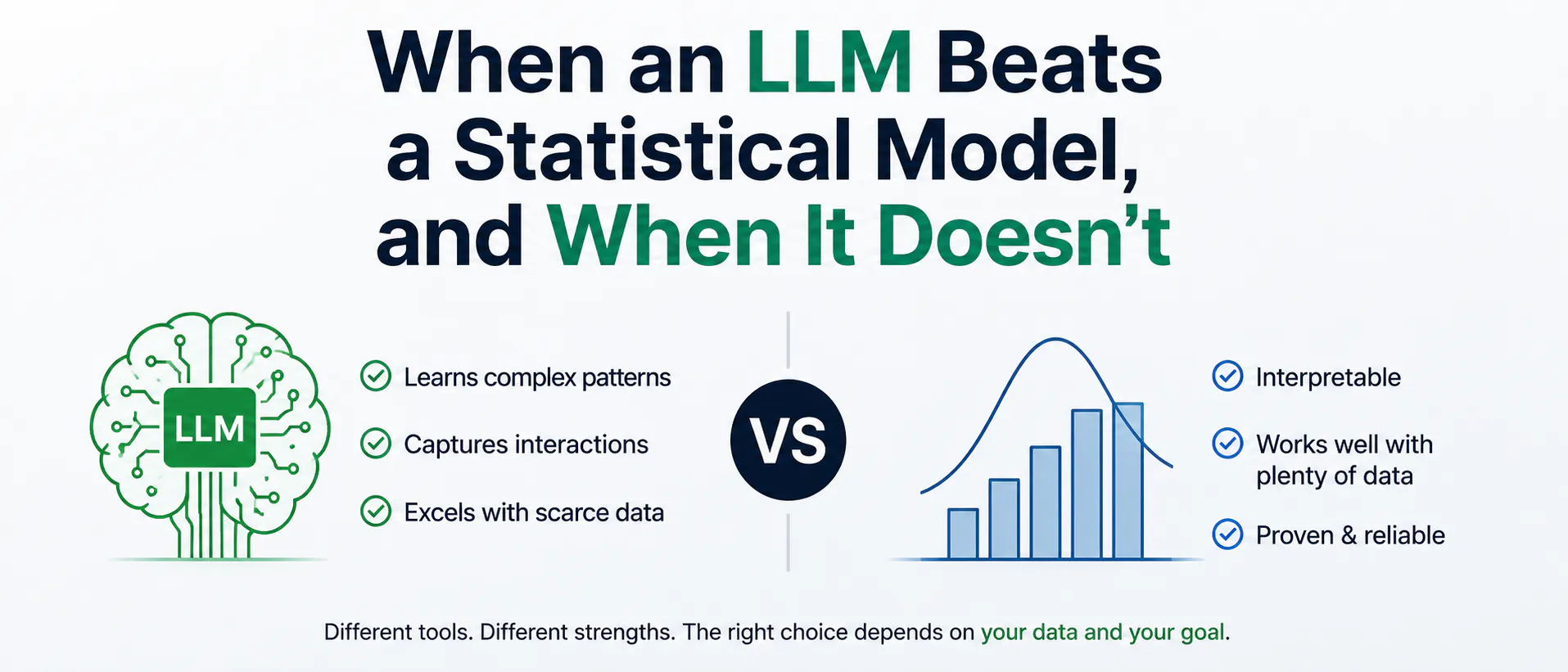
Take a car insurance pricing model, the kind of tool that's been doing this job since the 1970s, and instead of feeding it a tidy row of numbers, rewrite that same row as a sentence. Driver age, region, vehicle power, bonus-malus score (an insurer's shorthand for a driver's claims history), all of it, poured into a fixed text template that reads like an underwriting checklist. Then run that text through a large language model (LLM), grab the embedding it produces, a single numeric vector standing in for the whole passage, and hand that to the old pricing model in place of the features an actuary would normally hand-build.
That's what two researchers did in a preprint posted in June 2026, not yet peer-reviewed. It worked. The embedding-fed version predicted claim frequency better than the industry-standard model, at least when there wasn't much data to go on. Give it more data,...
Copyright of this story solely belongs to hackernoon.com. To see the full text click HERE