

Two-Factor Authentication: Because Apparently One Password Wasn't Annoying Enough
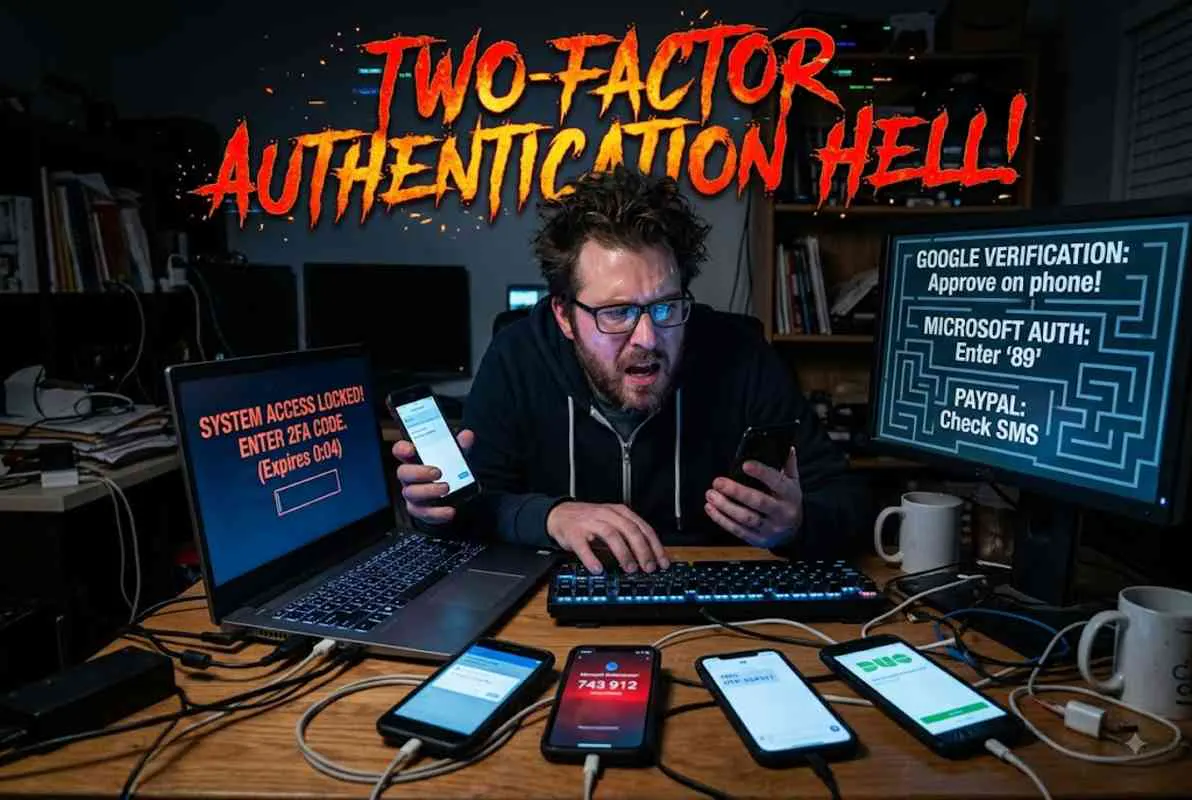
Two-factor authentication was supposed to make our lives online safer. Instead, it has turned logging into an account into a small administrative procedure.
Enter password.
Receive code.
Find phone.
Unlock phone.
Open authenticator.
Find code.
Enter code.
Code expires.
Request another code.
Receive code.
“Too many attempts. Try again later.”
The theory is simple enough. Enter your password, prove you have your phone, and you're in. Unfortunately, technology has never been particularly good at leaving simple things alone.
You enter the password you have used for years. The website accepts it, then calmly announces that another verification step is required before you can continue.
Fine. The phone comes out. It is unlocked. The authenticator app opens. The six-digit number is located and entered before the clock runs out.
Then the website rejects it because apparently those 30 seconds were an eternity in the security world.
So you request another code....
Copyright of this story solely belongs to hackernoon.com. To see the full text click HERE