
The Shape of Risk in Modern Software Development
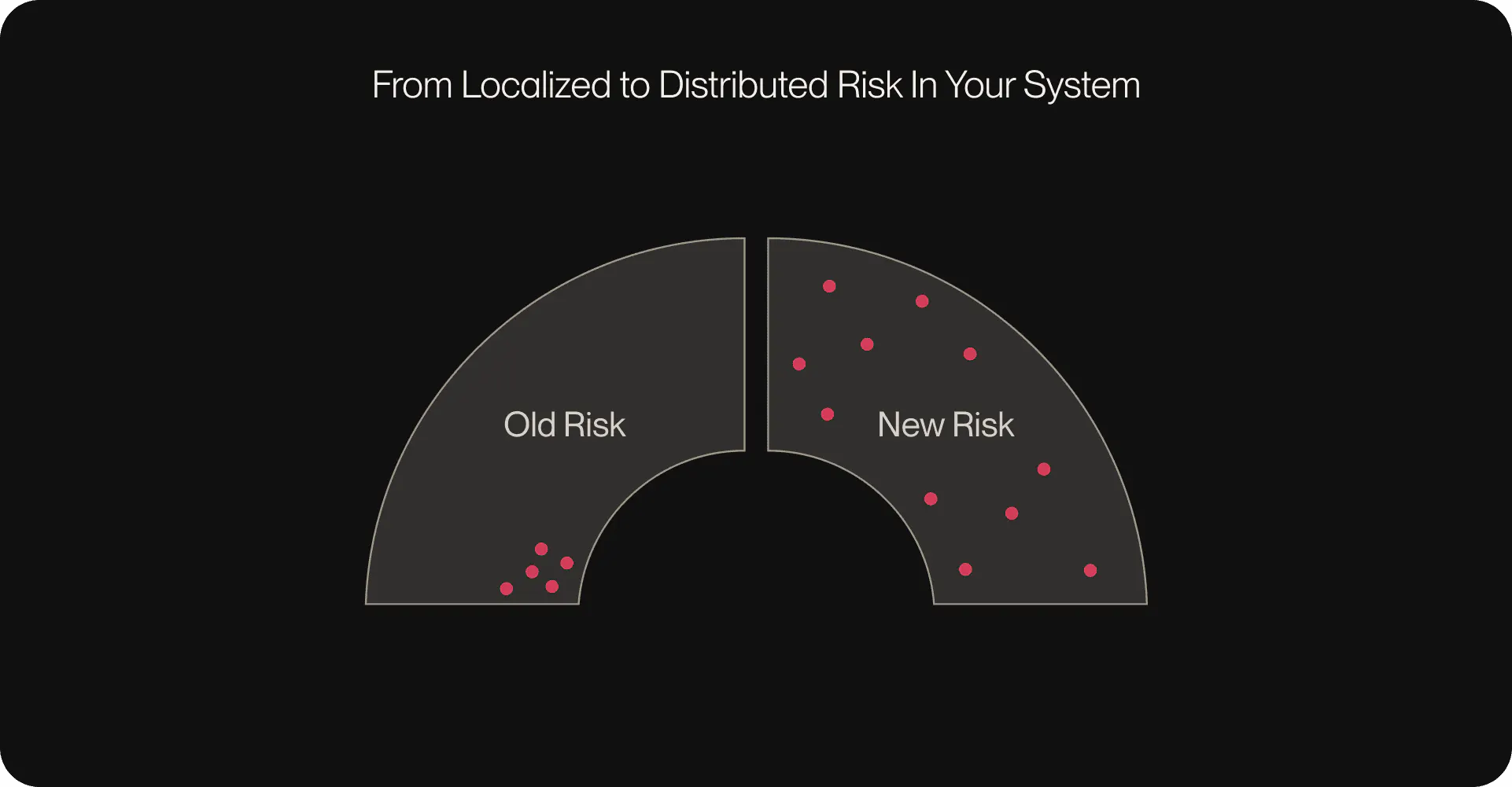
The evolving shape of risk
In modern enterprise software development, visibility has overtaken velocity as the primary constraint. AI-accelerated development, sprawling legacy systems, and fragmented teams have transformed how software is built and, more critically, how it breaks. As code volume grows exponentially, traditional methods of testing, triage, and risk mitigation are collapsing under their own weight.
Risk is no longer localized or linear. It’s emergent, distributed, and deeply embedded into the pipelines that once kept software safe. This shift demands a new mental model and toolset for managing quality at scale.
To understand where we are now and the limitations of legacy approaches, we need to explore how software risk used to behave and how that risk has changed.
The traditional risk landscape
Risk had a familiar and somewhat predictable shape in the early days of large-scale software development. It was typically concentrated in legacy codebases, pockets of institutional...
Copyright of this story solely belongs to hackernoon.com. To see the full text click HERE