
The Real Value of Event-Driven Architecture Isn't Technology: It's Cost Reduction
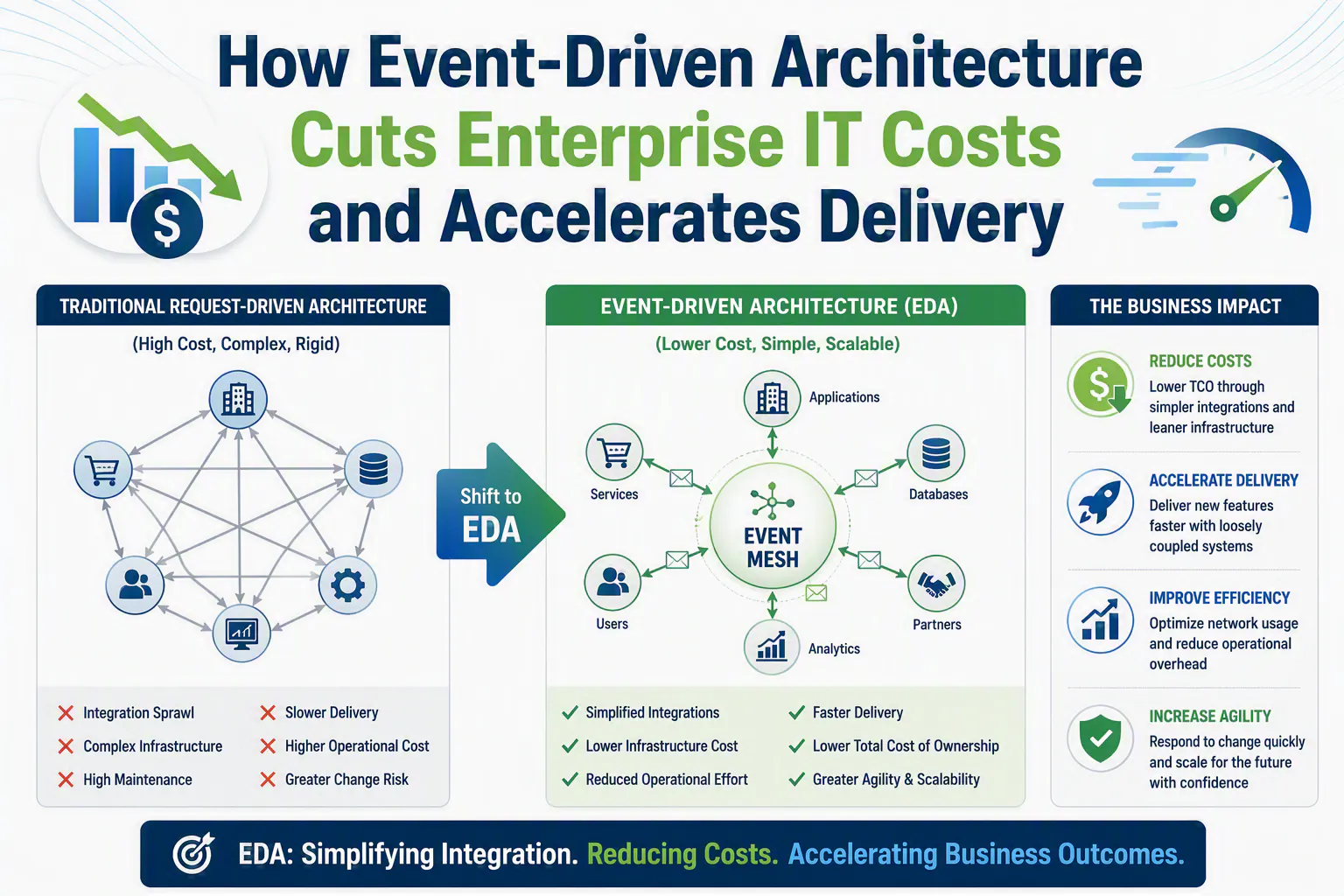
How Event-Driven Architecture (EDA) Significantly Reduces Enterprise IT Costs
In today's digital world, business users expect new features and services to be delivered faster than ever before, with minimal risk and within increasingly constrained budgets.
Unfortunately, traditional Request-Driven Architecture (RDA) often struggles to meet these expectations. As organizations scale, integration complexity, infrastructure costs, and operational overhead continue to grow, making even small changes expensive and time-consuming.
This is where Event-Driven Architecture (EDA) creates a significant advantage.
EDA is not just a modern integration pattern. It is a strategic approach that helps organizations reduce costs, accelerate delivery, and improve scalability while maintaining flexibility for future growth.
⚠️ Why Traditional Architecture Is Expensive
🌐 Complex Infrastructure
Traditional enterprise systems typically require multiple layers of infrastructure to support point-to-point communication between applications, including:
- 🔥 Firewalls
- ⚖️ Load Balancers
- 🛡️ Proxy Servers
- 🌍 Multiple Network Segments
- 🖥️ Dedicated Integration Components
As the number of...
Copyright of this story solely belongs to hackernoon.com. To see the full text click HERE