

The Great Monolith Renaissance: Why Startups Are Fleeing Microservices
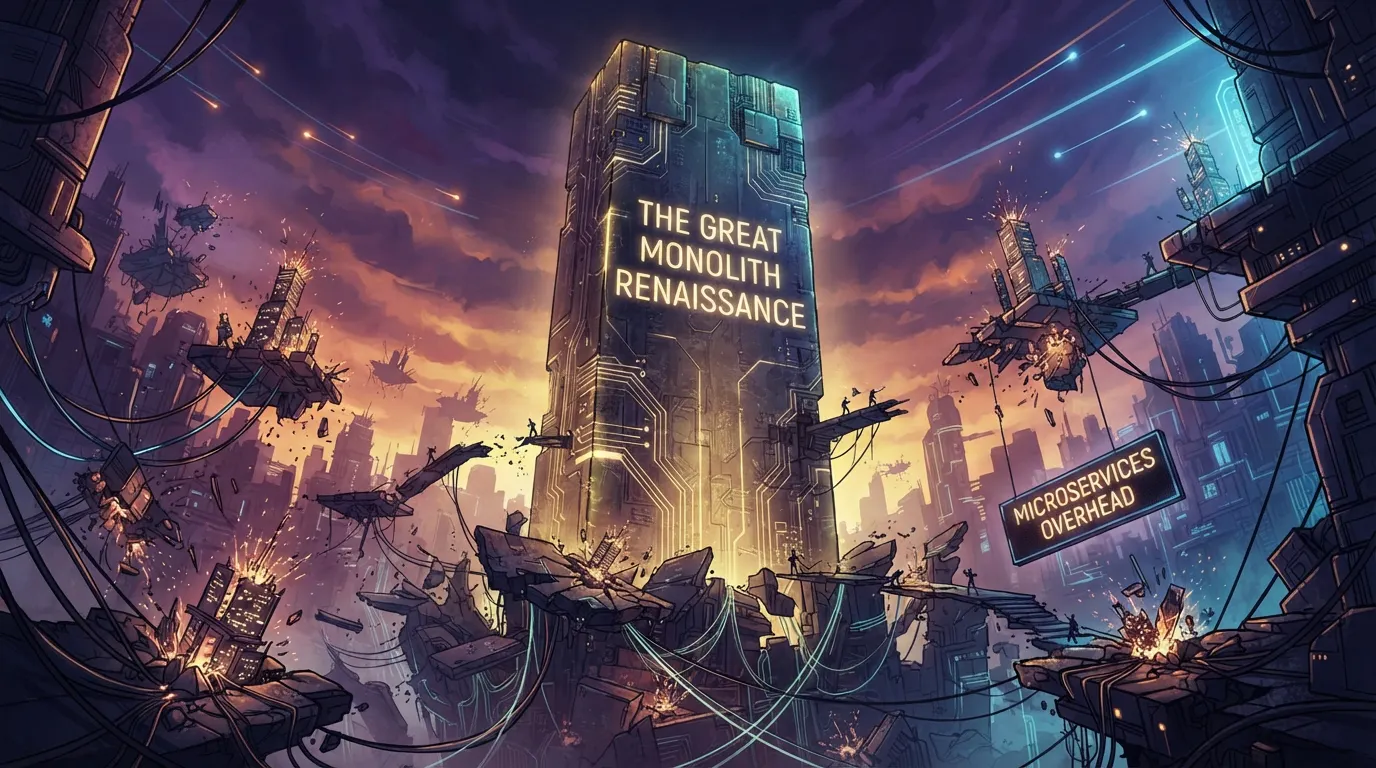
For the last decade, the software development community has been dogmatically indoctrinated that in order to build scalable applications, one has to utilize microservices as the default architectural style. Thought leaders in the space have preached about the benefits of breaking down applications into sets of decoupled, independently-deployable units. Software engineering bootcamps have conditioned the youth to think decoupling == scaling. Cloud vendors have made a killing promoting and monetizing the microservices movement. Startups have mindlessly jumped on the bandwagon.
But for a small team building an early-stage product, a microservices-based architecture represents an enormous distraction and overhead that detracts from their ability to deliver value to customers. The pendulum is now swinging back to the other extreme and we're witnessing the dawn of what is being called as the Monolith Renaissance.
🛑 The Microservice Tax: What They Didn't Tell You
The whole point of microservices is to allow large-scale...
Copyright of this story solely belongs to hackernoon.com. To see the full text click HERE