

The Economic Case for Investing in Youth Education
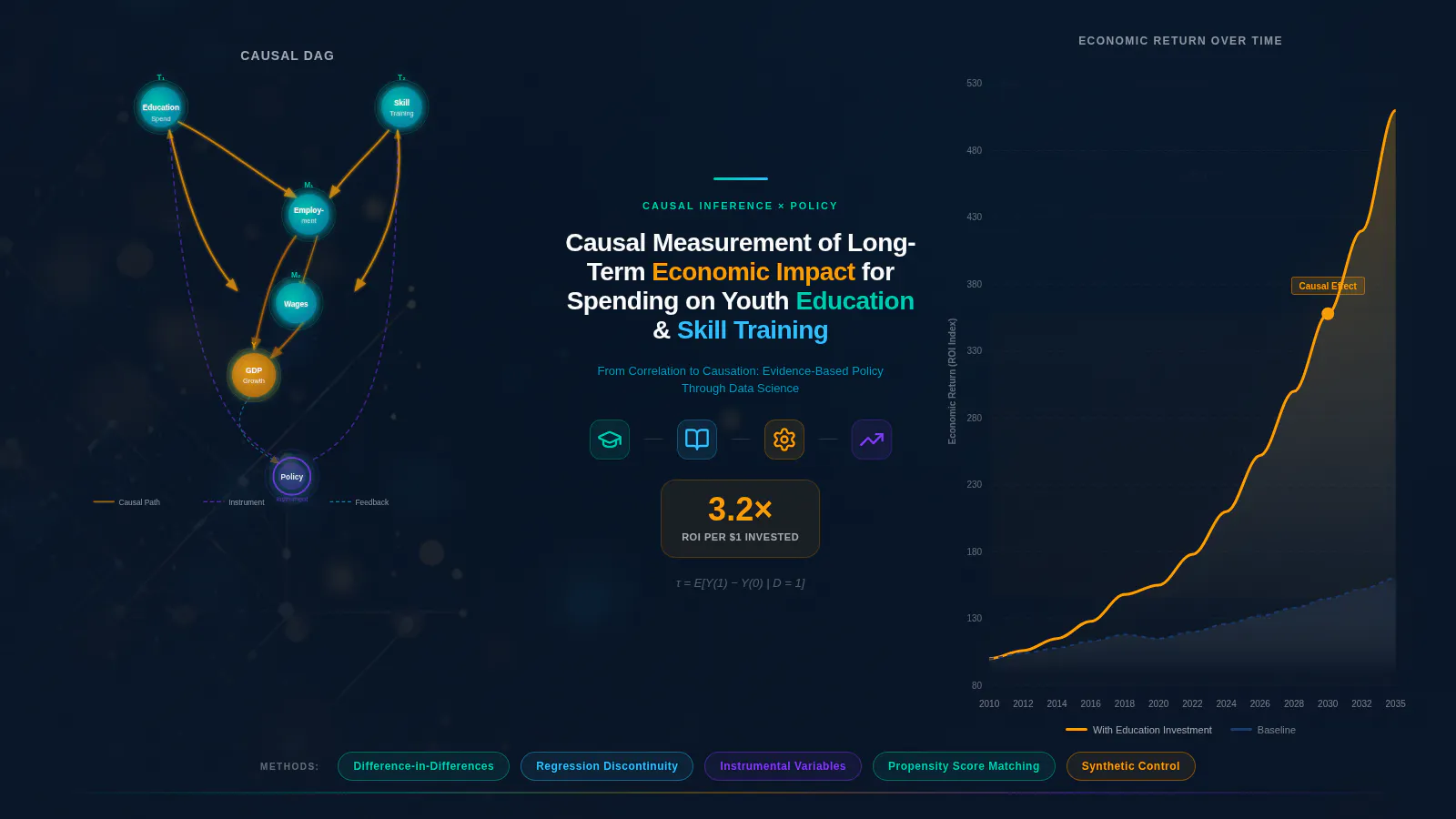
There is growing evidence from causal studies that investing in the education and training of youth is economically justifiable. Rigorous studies have used a variety of methodologies to establish growth-promoting returns to education quality. In particular, there appear to be very high returns to early childhood education. Six methodologies – difference-in-differences, instrumental variables, regression discontinuity designs, randomised controlled trials, propensity score matching, and synthetic control – are commonly used to address a variety of challenges in establishing the education effect, controlling for ability, and controlling for family background. Within the field, randomised controlled trials are generally considered to be the most valid method for establishing causal effects, and two famous examples of such studies are those undertaken by Nobel laureate James Heckman on the Perry Preschool programme and the ABC/CARE programme. These studies, as well as others, have found large social returns, both immediate and very long-term, of the order...
Copyright of this story solely belongs to hackernoon.com. To see the full text click HERE