

The Bicycle Blind Spot: Why Retail Analytics Still Underestimates Cyclists
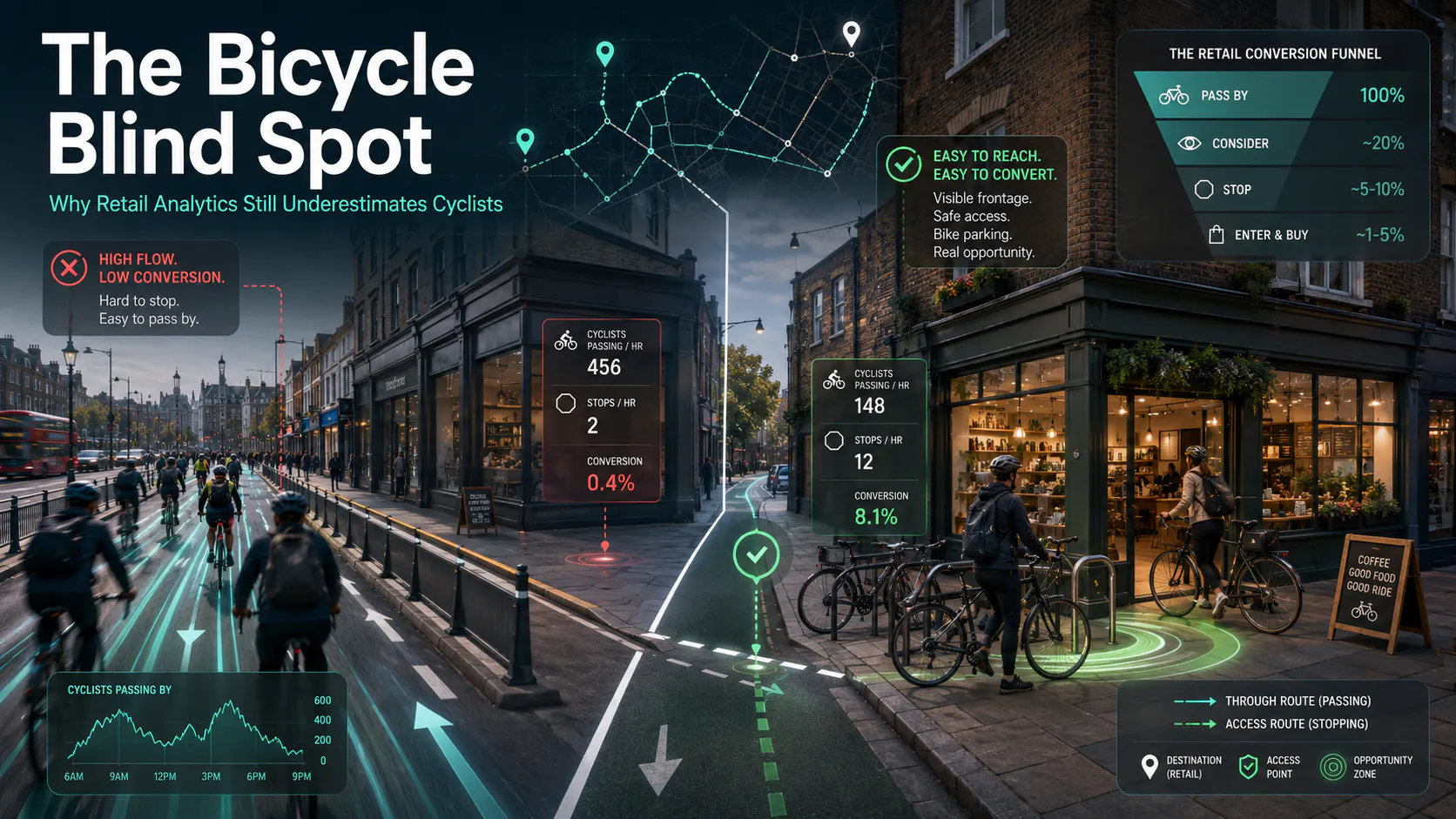
Retail location models usually divide urban movement into three broad groups: drivers, public transport passengers and pedestrians. Cyclists rarely receive the same analytical treatment.
They may be counted as road traffic, included in a general “active travel” category, or lost somewhere between pedestrian footfall and vehicle movement. The result is not merely a transport-data problem. It is a retail-demand problem.
London recorded an estimated 1.40 million cycling trips per day in 2025, 42 per cent more than in 2019. Cycling is no longer a marginal movement pattern that retail models can safely ignore.
Yet many location assessments still struggle to answer a basic commercial question:
Does a cycle route make a shop more accessible, or does it simply move more people past the frontage without giving them a practical opportunity to stop?
A Cyclist Is Not a Pedestrian on Wheels
Cyclists occupy an unusual position in urban retail.
They...
Copyright of this story solely belongs to hackernoon.com. To see the full text click HERE