

Speed Beat Relevance: What Broke When I Put an LLM in Front of Product Search
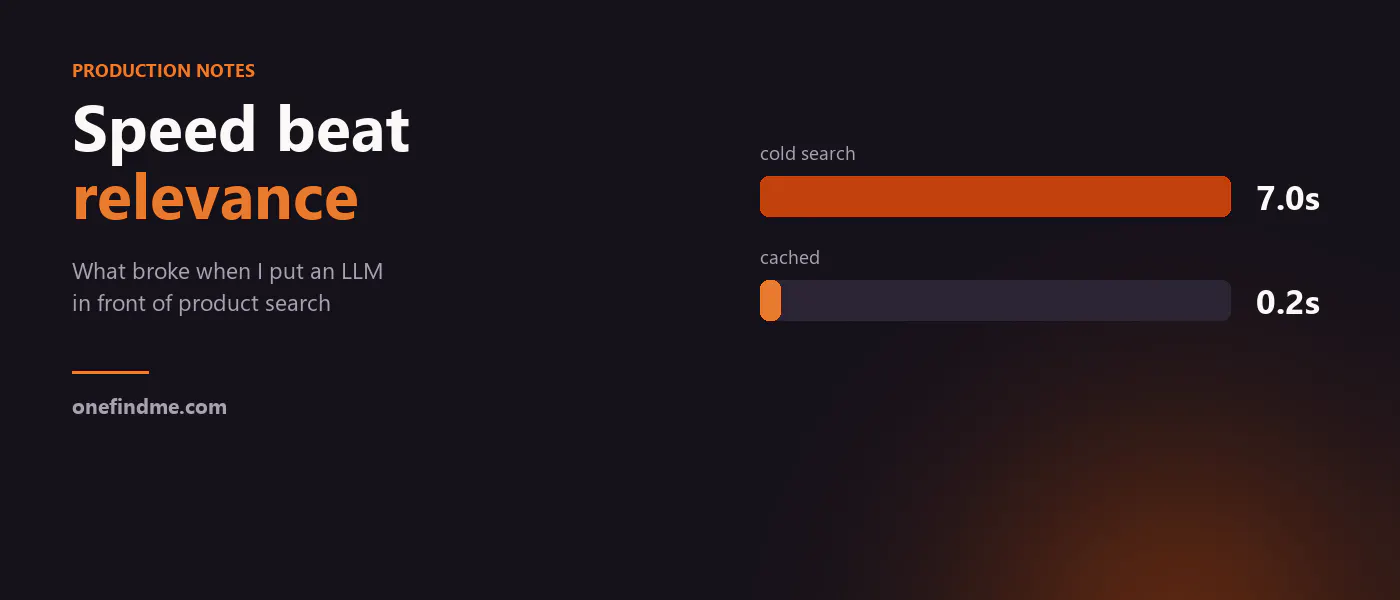
I built a natural-language product search engine over a marketplace catalogue in twelve languages. The interesting failures were not in the model's language understanding — that part mostly worked. They were in the seams: a price filter that had never once filtered, an LLM confidently inventing valid-looking category IDs, a substring match that turned "newborn" into "born" for years, and the finding that a six-second cold search lost more shoppers than an imperfect result ever did.
Two years ago, searching a large marketplace catalogue in anything other than English or Chinese was close to useless. Type a plain description of what you want in Hebrew, Arabic or Polish and you get a handful of results, most of them irrelevant. The catalogue has hundreds of millions of listings. The problem is not that they are missing — it is that the words a shopper uses and the words a seller writes...
Copyright of this story solely belongs to hackernoon.com. To see the full text click HERE


