
Six Ways AI-Generated EDA Can Mislead You Without Throwing an Error
Ask an AI coding assistant to run exploratory data analysis on a new dataset and it will produce, in seconds, something that looks like a competent analyst's first pass: .describe(), a correlation matrix, some distribution plots, a groupby or two, and a paragraph of narrative summarizing what it found.
The problem is not that this output is wrong. Often it's correct. The problem is thatit looks identical whether it's correct or not — and the failure modes that make it wrong are exactly the ones a quick skim won't catch, because nothing throws an error and nothing looks incomplete.
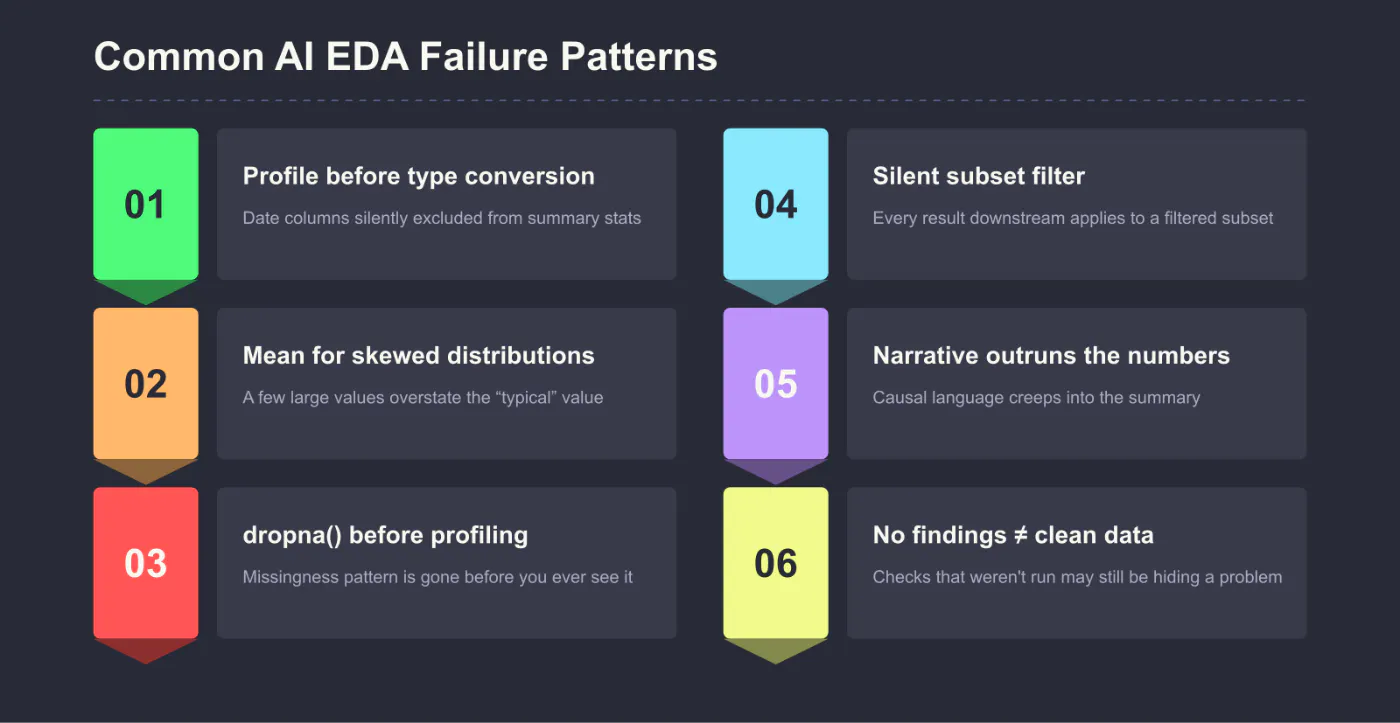
Here are six patterns that show up constantly in AI-generated EDA, each one silently producing output that reads as clean.
1. Profiling before type conversion
# # The AI commonly generates this order — the problem is invisible in the outputprint(df.describe()) # order_date excluded — it's still a stringdf["order_date"] =...
Copyright of this story solely belongs to hackernoon.com. To see the full text click HERE