
RAG Architecture Explained: How It Works, When to Use It, and Why Most Deployments Fail
Large language models have a problem that nobody in the industry likes to talk about plainly: they're frozen in time. Everything an LLM knows, it learned during training. Ask it about your company's Q4 results, a regulatory update from last month, or a product spec that changed last week, and it will either hallucinate something plausible or admit it doesn't know. Neither answer is acceptable in a production system.
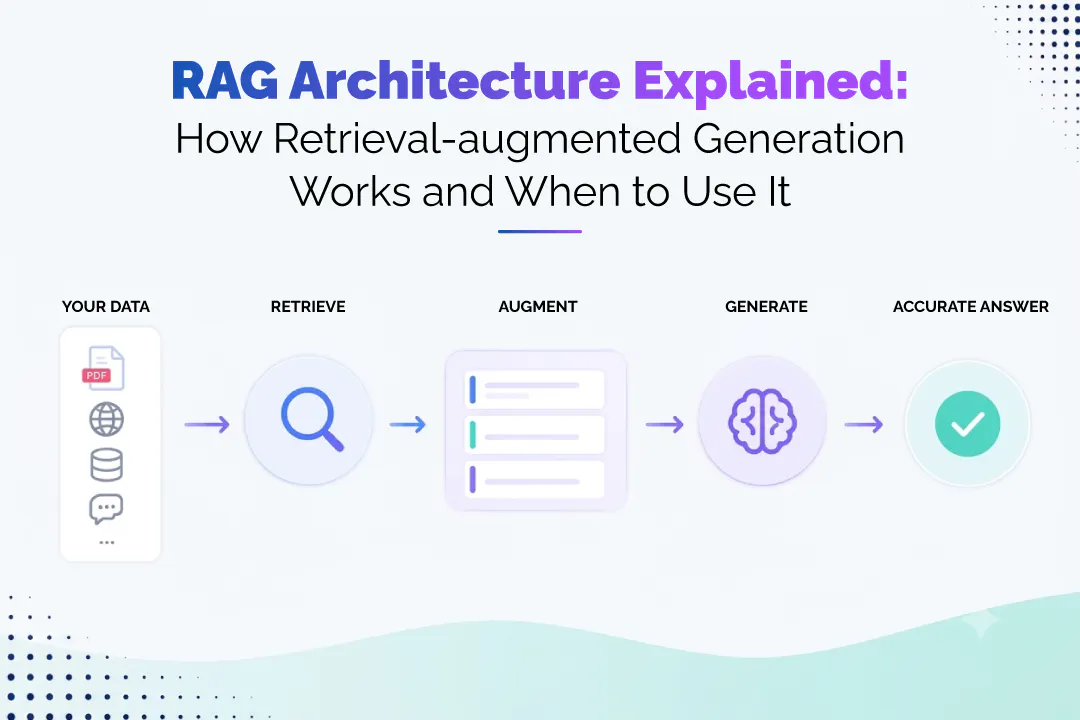
Retrieval-augmented generation, or RAG, is the architectural fix. Instead of relying on what the model memorized, RAG retrieves relevant documents from your own knowledge base at query time and hands them to the model as context before generating a response. The answer is grounded in something real, not inferred from patterns in training data.
This sounds simple. The implementation is not. I've seen teams spend months debugging what they thought was a model quality problem, only to discover the real issue...
Copyright of this story solely belongs to hackernoon.com. To see the full text click HERE