

Planet orbits so close to its star that their magnetic fields connect
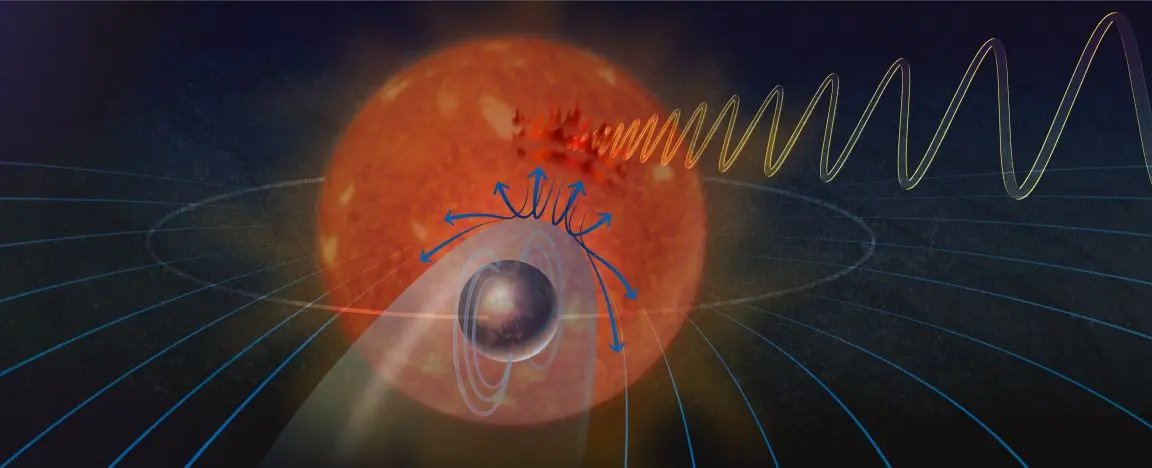
The second issue was that in some observations, there were no periodic signals at all. Because we have enough archival observation data, however, the researchers were able to track when the signal appeared and disappeared. And they were able to find a periodicity to that—one that lined up precisely with the star’s cyclic activity. (Think of our Sun’s solar cycle, and apply that to a different star.)
The researchers suspect that, during high solar activity, the signal from the planet’s magnetic influence is swamped. At low periods in the cycle, the researchers suspect that there simply isn’t enough activity there for the magnetic interactions to enhance. So, they think that we see the enhanced chromosphere emissions only at intermediate levels of stellar activity.
How is the magnetic influence showing up on the star in the first place? The researchers consider a number of theoretical models, but the only one that...
Copyright of this story solely belongs to arstechnica.com. To see the full text click HERE