

Optimizing Django Docker Images With Multi-Stage Builds and Slim Python Runtimes
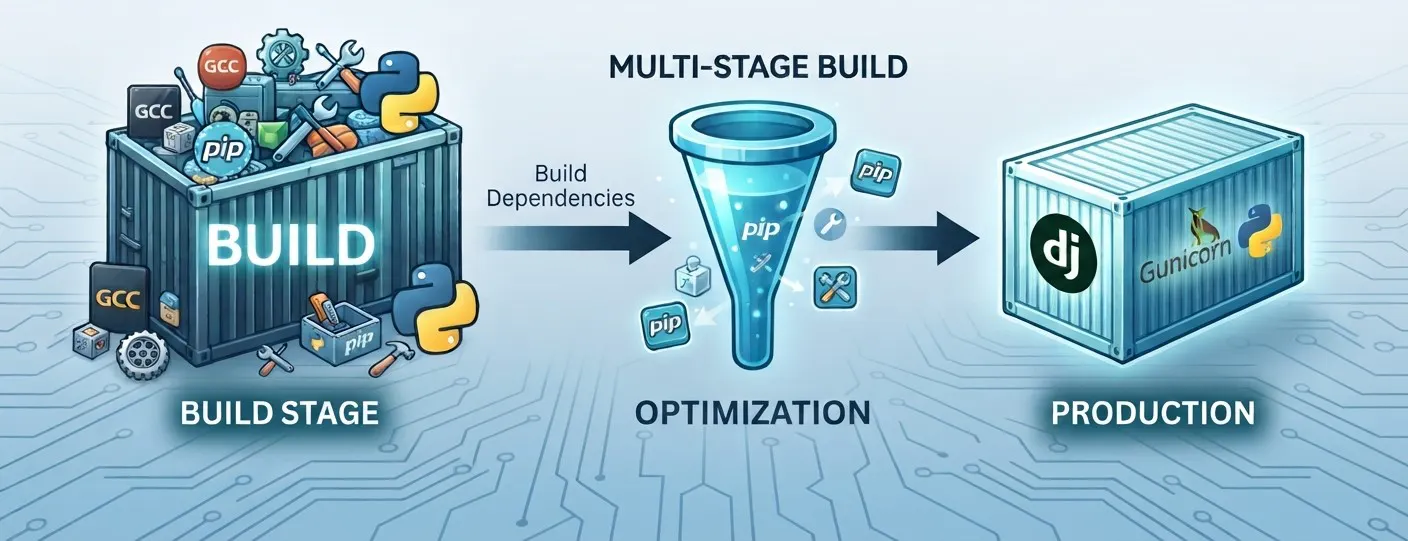
Let’s be honest for a second. How many times have you written a Dockerfile for a Python app, run docker build, and stared in horror at a final image size north of 1 GB?
For a framework that champions clean, elegant code, our production Docker images often look like a digital junk drawer. We bundle build-time dependencies, system compilers (gcc), development headers, and cached pip wheels into the exact same container that’s supposed to run lean and mean in production.
If you are shipping a Django application to the cloud, bloating your container isn't just an aesthetic crime; it hurts your wallet and your security posture. Larger images take longer to pull on auto-scaling triggers, consume more storage on your container registry, and carry a larger attack surface with unnecessary system packages.
In here, we are going to fix that. We'll build a production-grade, secure, and lean Django Docker...
Copyright of this story solely belongs to hackernoon.com. To see the full text click HERE