

Optimizing Apache Spark for Large-Scale Data Processing: Techniques, Tuning, and Best Practices
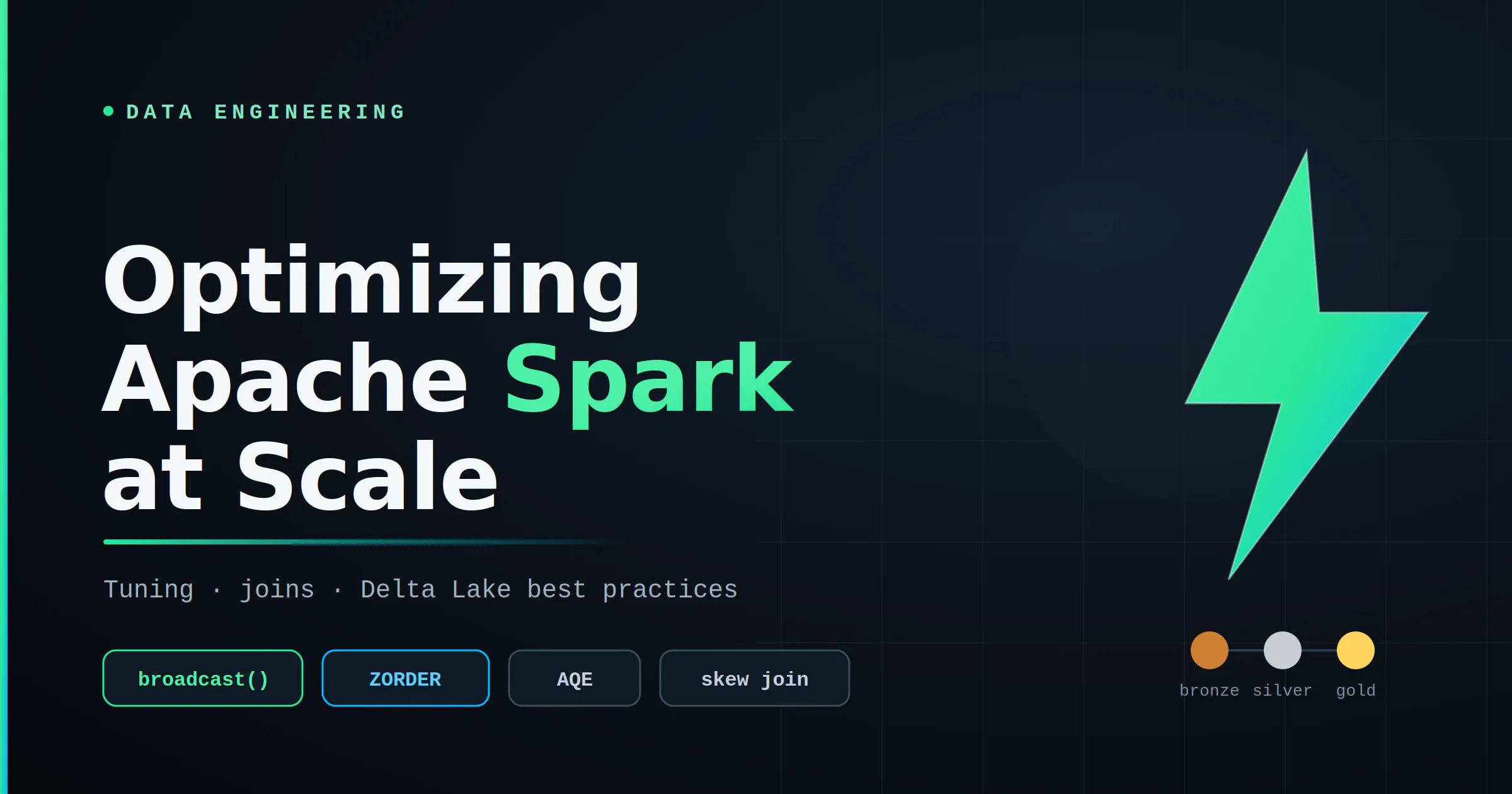
Modern E-commerce systems generate massive volumes of data, orders, customers, payments, shipments, returns, browsing analytics. A production data lake must process this data efficiently and reliably on Databricks.
This guide explains every important PySpark optimization technique, with clear reasoning, when to use, when NOT to use, and Databricks-specific best practices.
Architecture Overview
We implement a classic Medallion Architecture:
- Bronze: Raw E-commerce data (orders, customers, payments)
- Silver: Cleaned, conformed, standardized layers
- Gold: Aggregations (GMV, AOV, RFM clustering, funnels)
Data arrives through:
- Incremental ingestion from APIs & CDC
- Batch ingestion from S3/ADLS
- Streaming events (optional)
Section 1: PySpark & Databricks Performance Foundations
1. Cluster Sizing & Autoscaling
Choose executors with 4–8 cores to avoid excessive JVM garbage collection.
Autoscaling lets the cluster expand during peak loads and shrink when idle, reducing cost.
Balanced memory and core allocation ensures consistent performance and avoids skewed executor workloads.
What matters:
- Number of executors
- Executor memory
- ...
Copyright of this story solely belongs to hackernoon.com. To see the full text click HERE


