

OpenClaw in Practice: Building Laptop-Less Engineering Workflows with an Agent Harness
Introduction
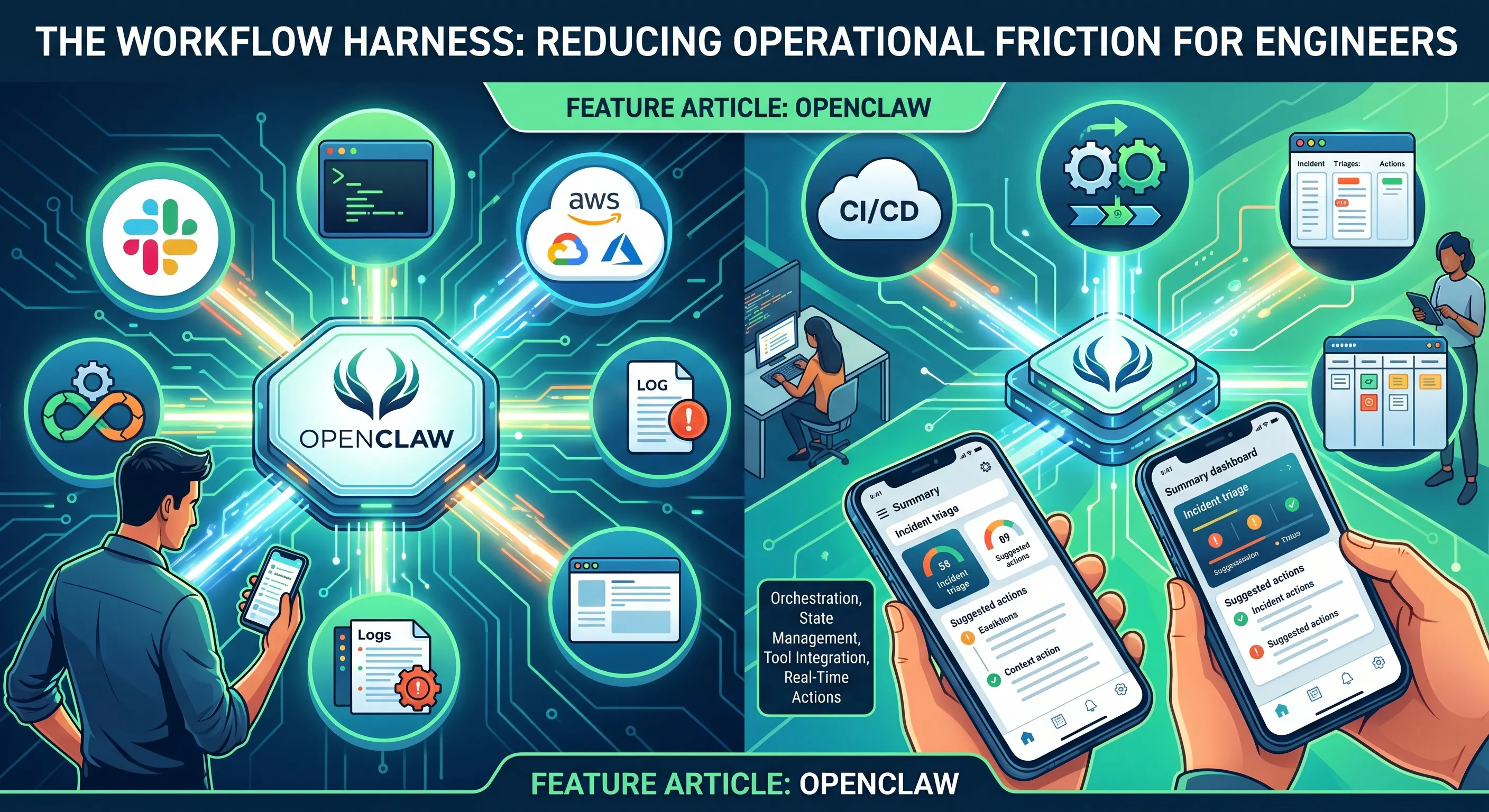
Engineers spend a surprising amount of time switching between Slack, terminals, cloud consoles, CI/CD dashboards, logs, issue trackers, and browsers. The friction is not usually “hard work”; it is the context switching around the work.
That is where OpenClaw becomes interesting. The value is not that it is “an AI assistant.” The value is that it behaves more like a workflow harness: something that keeps state, routes tasks, remembers project context, and can execute actions across systems without requiring the engineer to stay glued to a laptop.
For a Hackernoon audience, the right framing is simple: OpenClaw is useful when it reduces operational friction, not when it produces flashy demos.
1. Why OpenClaw Is Different from a Chatbot
A chatbot answers questions. OpenClaw manages workflows.
That sounds subtle, but it changes the engineering model completely. A chatbot is typically stateless, short-lived, and conversational. OpenClaw, by contrast, is designed to...
Copyright of this story solely belongs to hackernoon.com. To see the full text click HERE