

One Day of AI Video Generation Undid a Forest's Work
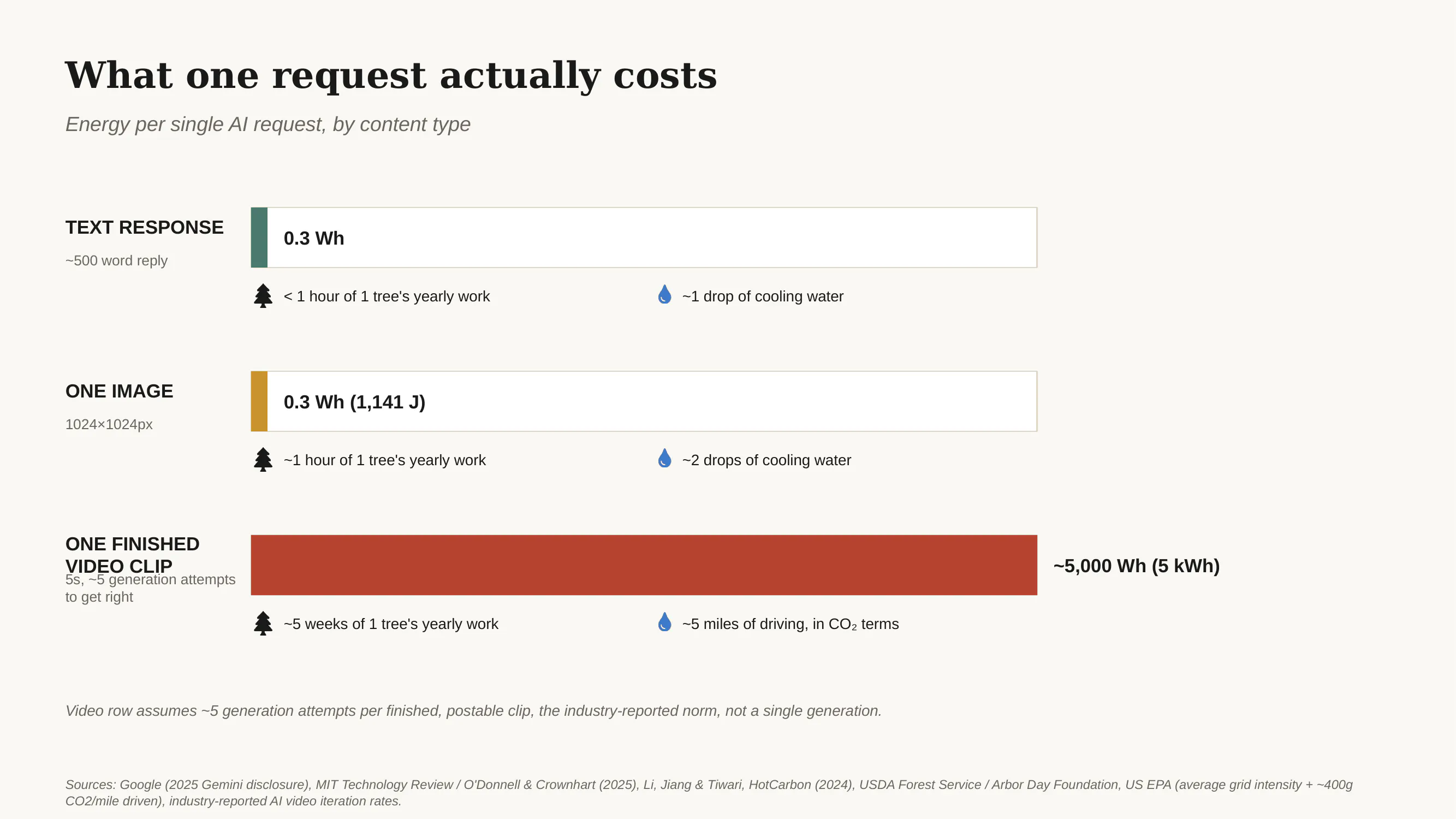
You typed one sentence, and six seconds later you had a video. It felt free, and that's the whole design, not an accident. The number that actually matters isn't easily visible at all. Here's the receipt. Before it shut down in March 2026, OpenAI's Sora cost the company about $15 million a day to run, and reporting from eWeek and Cybernews put the compute cost of a single 10-second clip at roughly $1.30. Divide one by the other and you get somewhere around 11.5 million 10-second clips generated per day, from one product, at its peak.
Now do the energy math. MIT Technology Review's research puts a 5-second AI video clip at roughly 1,000 watt-hours, in the range of running a microwave for an hour. Even using a conservative, non-scaled estimate for a 10-second clip, not the steeper nonlinear jump a 2024 HotCarbon study actually found, that's still north of...
Copyright of this story solely belongs to hackernoon.com. To see the full text click HERE