
Neanderthals drilled cavities to treat a toothache 59,000 years ago
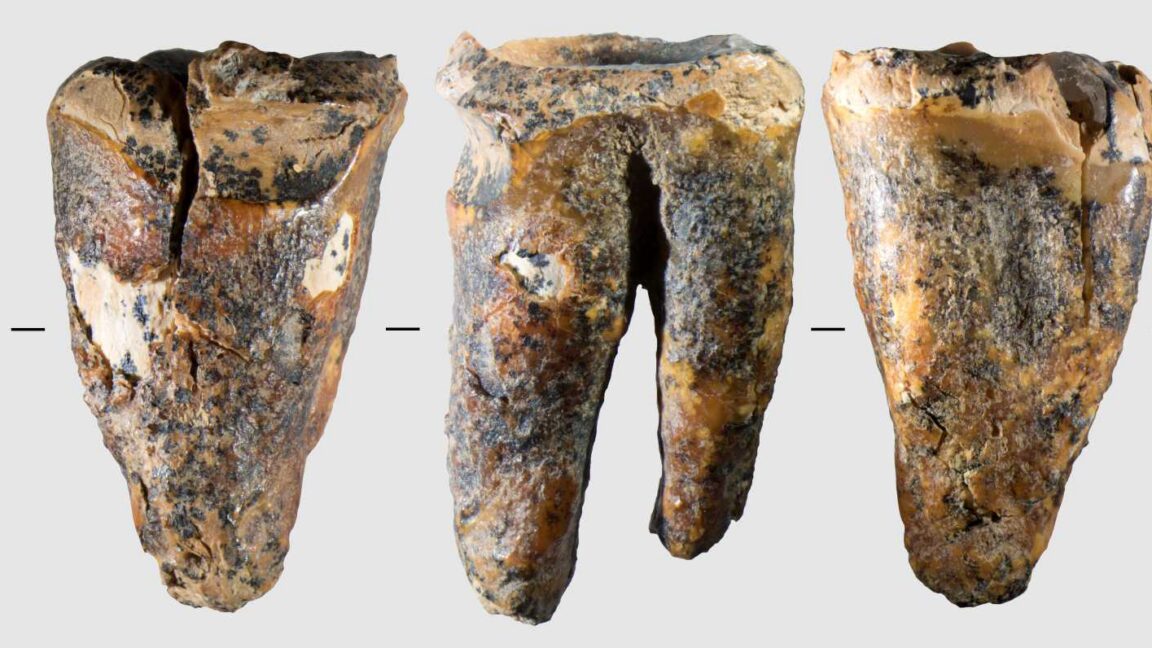
Two of the teeth were museum specimens, whose age and context curators didn’t know, making them less useful for other kinds of research. But one, an upper left third molar with an untreated cavity, came straight from the mouth of one of the authors—for science!
(In most scientific papers, a section at the end outlines the specific contributions of each author, which usually means tasks like writing, data collection, production of stone tools, and analysis. This paper’s author contributions did not list “donation of a tooth for experimental archaeology,” so we can only speculate about who bit the proverbial bullet.)
The holes and striations left behind by Zubova and her colleagues’ experiments very closely matched what they saw on the molar from Chagyrskaya, which means it’s very likely that the 59,000-year-old tooth was, in fact, the aftermath of an actual Paleolithic medical procedure.
We already knew that Neanderthals, and even...
Copyright of this story solely belongs to arstechnica.com. To see the full text click HERE