
NASA's Webb Finds Alien Worlds Colliding Hard Enough To Vaporize Rock
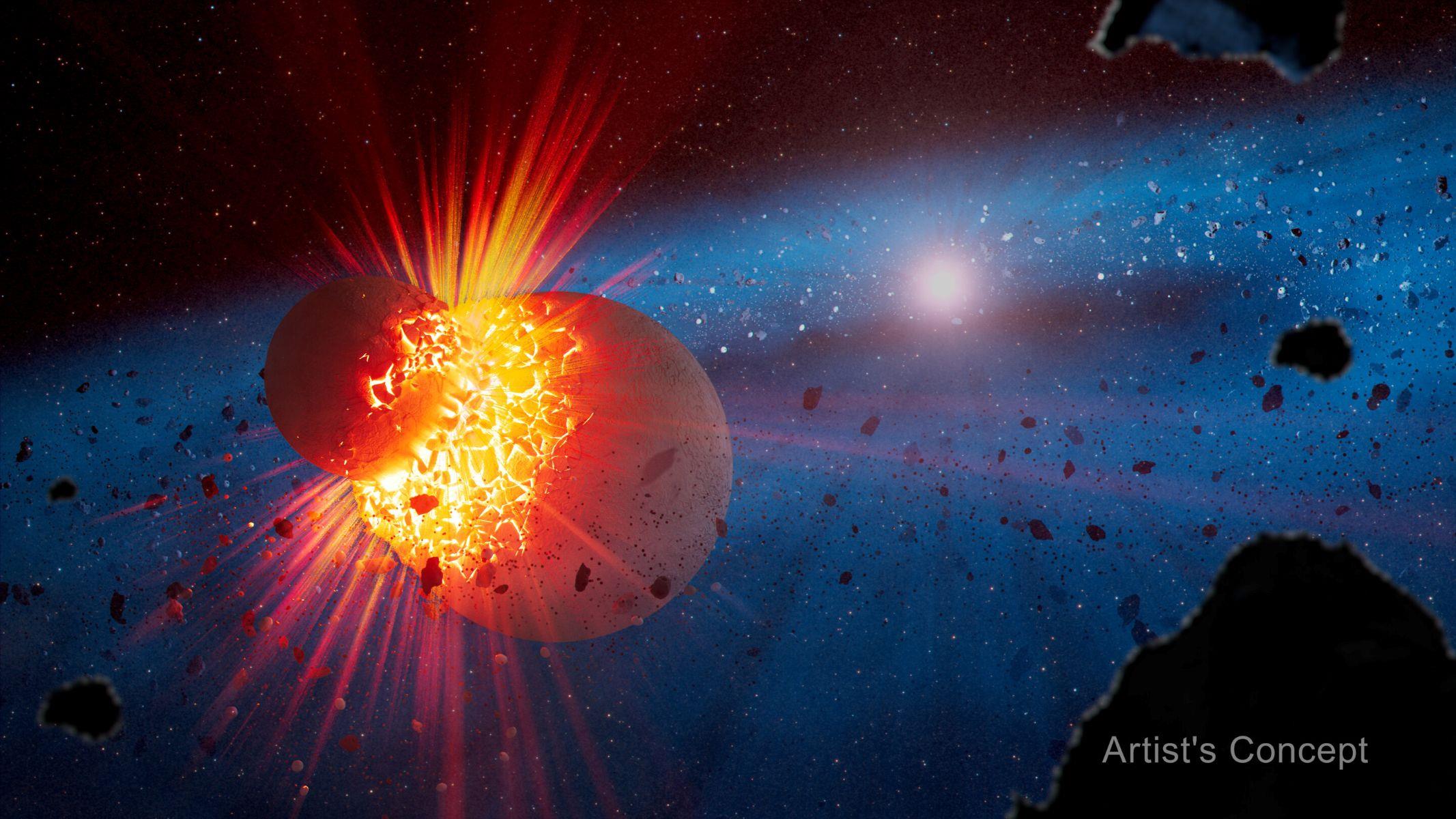
Observations from NASA's Webb telescope have revealed detailed chemical fingerprints from catastrophic, planet-shattering collisions in other solar systems, which in turn offer a peek into how worlds like Earth might have formed and evolved.
Published in The Astrophysical Journal, research led by Dr. Kate Su of the Space Science Institute in Colorado analyzed a sample of 21 extreme debris disks, i.e. dust-filled belts surrounding young stars that occur from ongoing planetary smashups. Even though the transition from gas-rich planetary nurseries to quiet star systems is a standard evolutionary arc, extreme debris disks remain extremely rare, appearing around only about 1% of young stars. Using Webb’s Mid-Infrared Instrument (MIRI) with archival data from the retired Spitzer Space Telescope, Su and her team decoded the mineral signatures wrought from these violent impacts.
Webb’s imaging allowed the researchers to classify the debris into two chemical categories: silica-rich and silica-poor. Silica-rich disks...
Copyright of this story solely belongs to hothardware.com. To see the full text click HERE