Israel v. Alkamalat and the Legal Standard for AI-Assisted Forensics
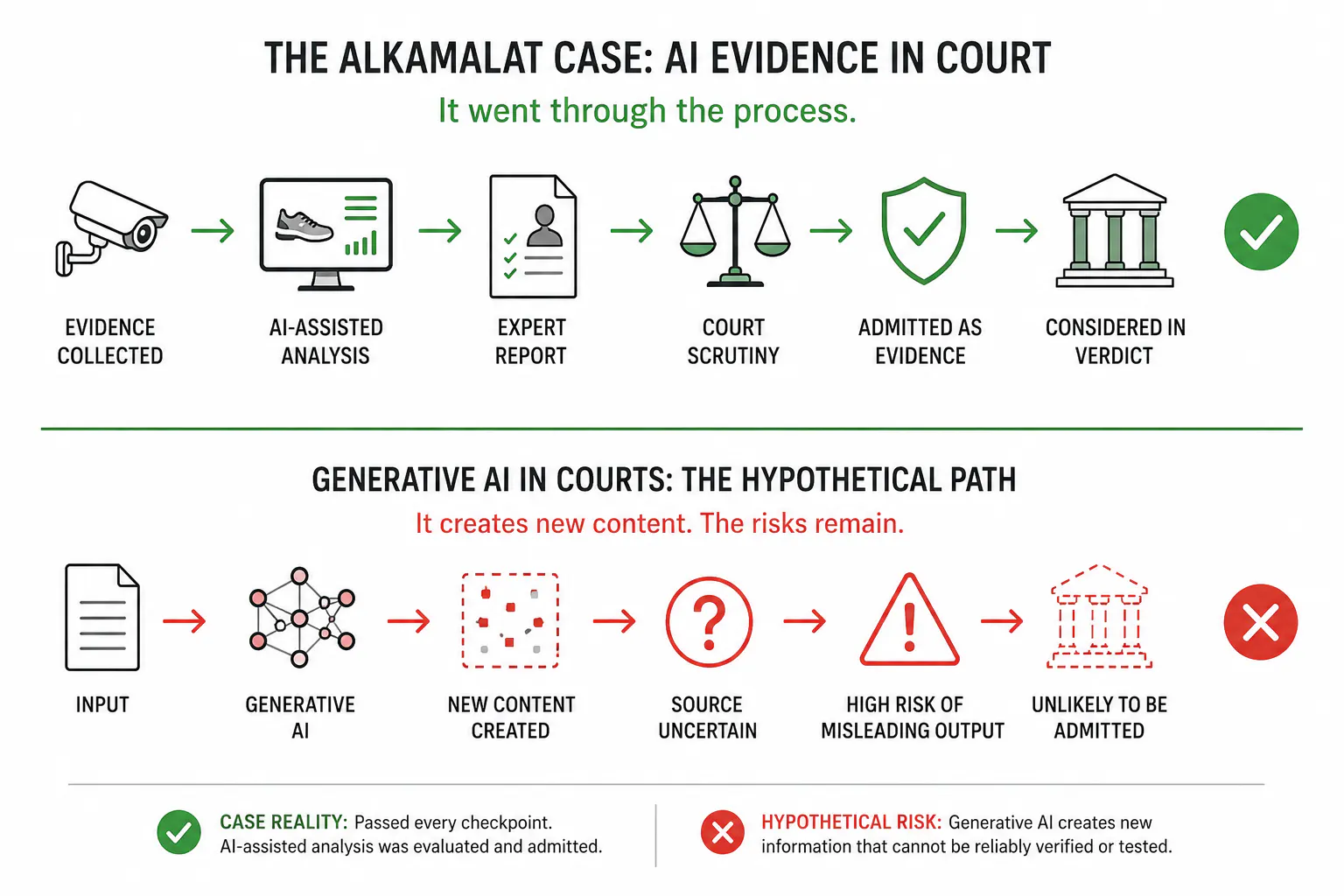
Artificial intelligence has spent the last several years generating headlines about the future. AI will replace jobs. AI will transform industries. AI will revolutionize medicine, law, engineering, and science.
The courtroom, however, moves differently.
Courts are not designed to adopt technology because it is impressive. They adopt technology because it can survive scrutiny. Every new forensic method, from photography to fingerprints to DNA analysis, to even cctv has faced the same challenge. Before a court can decide whether the evidence is persuasive, it must first decide whether the methodology belongs in the courtroom at all.
That is why the significance of Israel v. Alkamalat may have little to do with artificial intelligence itself.
The significance lies in what happened when AI-enhanced evidence was introduced into the normal judicial process and was not excluded from it. During that time, countless discussions surrounding AI in law focused on hypothetical futures. Could AI...
Copyright of this story solely belongs to hackernoon.com. To see the full text click HERE