

How to Create the Heart Pattern in Python
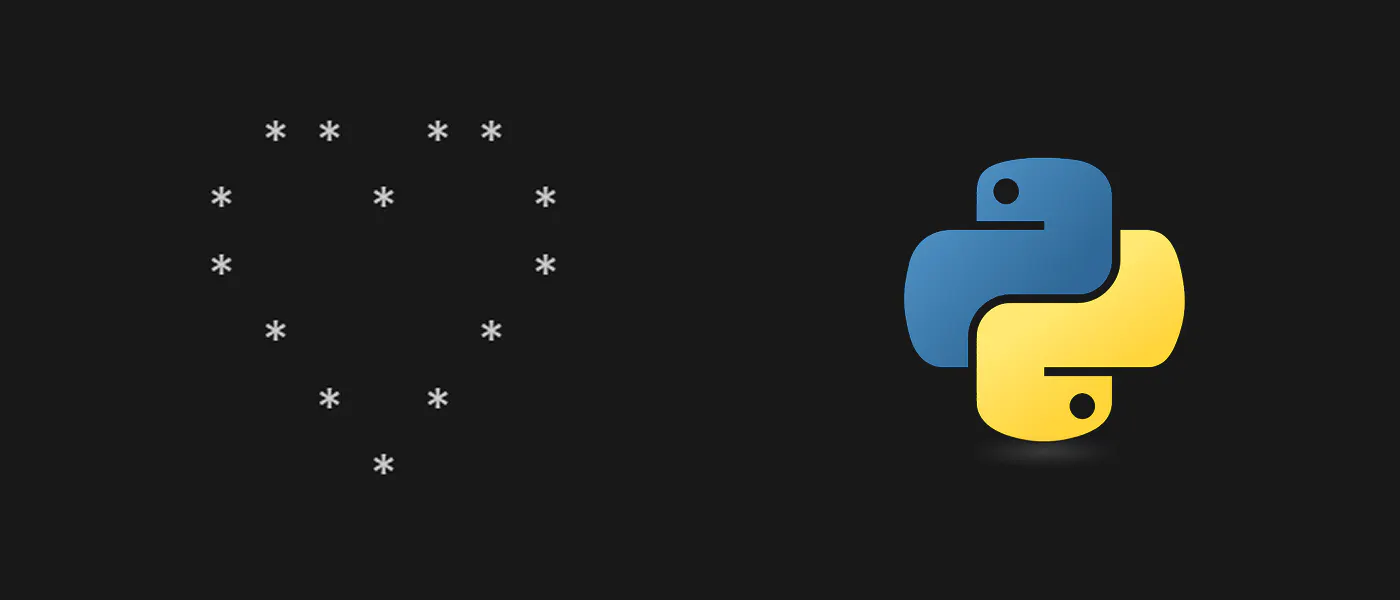
Coding geometric patterns is a classic milestone for any programmer. It transitions your mind from thinking in linear text to thinking in two-dimensional coordinates. While drawing a simple square or triangle is straightforward, rendering a curved shape like a heart requires a solid grasp of nested loops and multi-variable logic conditions.
In this guide, we will break down the precise mathematics behind the Python heart pattern, solve the common debugging pitfalls (such as the infamous coordinate spacing issue), and optimize the rendering logic.
Understanding the Grid Architecture
To build a heart using ASCII characters (like *), we must visualize our output window as a Cartesian coordinate system or an array matrix. We will build a matrix consisting of 6 rows (i) and 7 columns (j).
The secret to creating complex shapes without hardcoding every single line is identifying the mathematical patterns for the boundaries. A heart can be broken...
Copyright of this story solely belongs to hackernoon.com. To see the full text click HERE