

How AI Systems Can Build Self-Healing Data Infrastructure
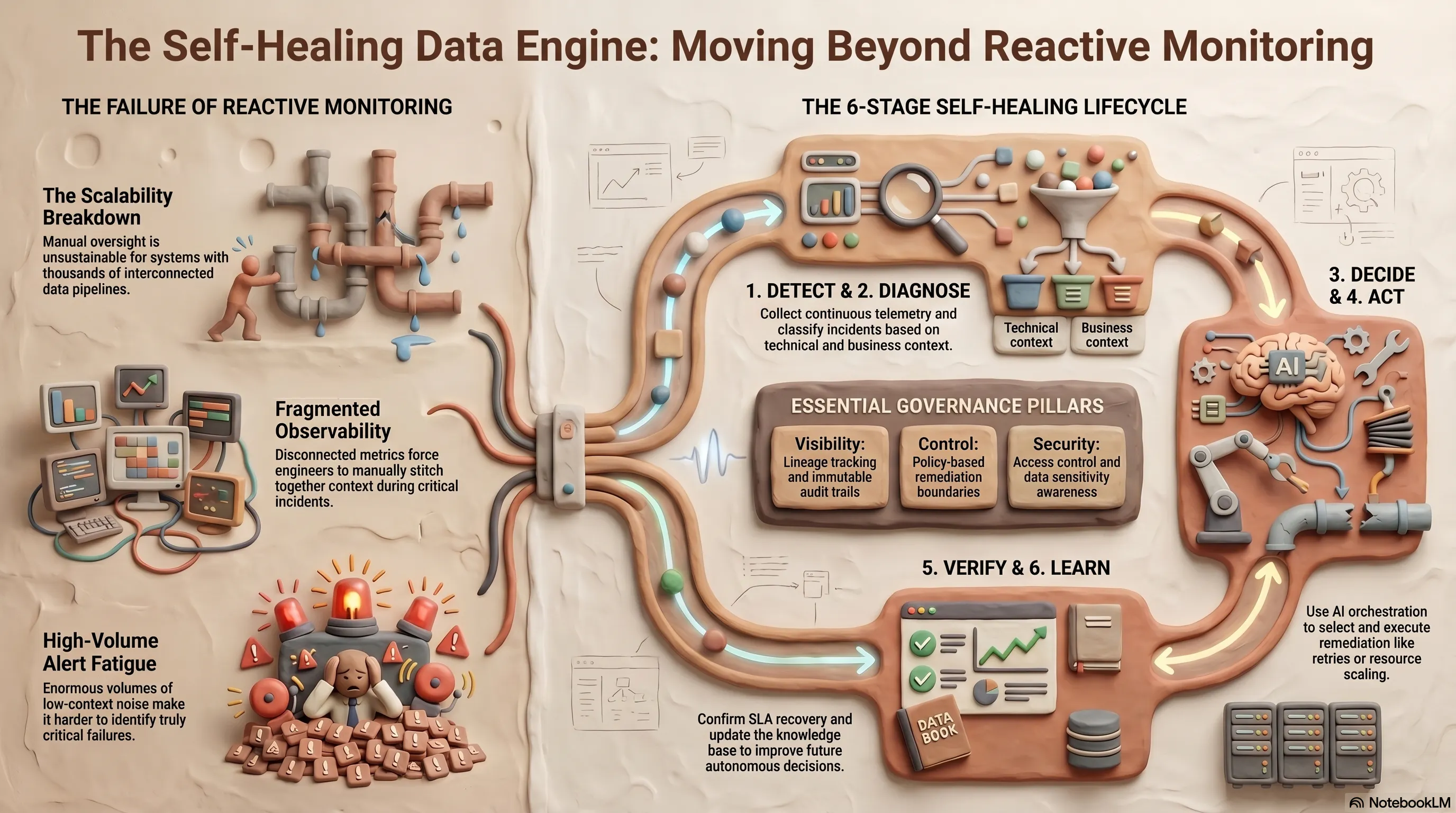
Modern enterprise data systems are becoming too large, too distributed, and too operationally complex for traditional monitoring approaches to keep up.
Today’s AI and data platforms rely on thousands of interconnected pipelines powering analytics, machine learning, customer-facing products, regulatory reporting, and real-time operational intelligence. Yet despite the critical importance of these systems, most enterprise reliability workflows remain highly reactive.
A pipeline fails. Alerts fire. Engineers investigate logs. Teams manually retry workflows, diagnose dependencies, and attempt recovery under growing SLA pressure.
This model no longer scales.
While building autonomous reliability systems for cloud-native data platforms, I observed a recurring pattern across enterprise environments: the industry continues treating reliability as a monitoring problem instead of a systems design problem.
The future of enterprise AI infrastructure will not simply involve better dashboards or more alerts. It will require systems capable of detecting failures, diagnosing root causes, initiating remediation workflows, verifying recovery, and continuously...
Copyright of this story solely belongs to hackernoon.com. To see the full text click HERE