

GNSS Spoofing and Jamming: What They Do to RTK Positioning and How Field Teams Can Spot Them
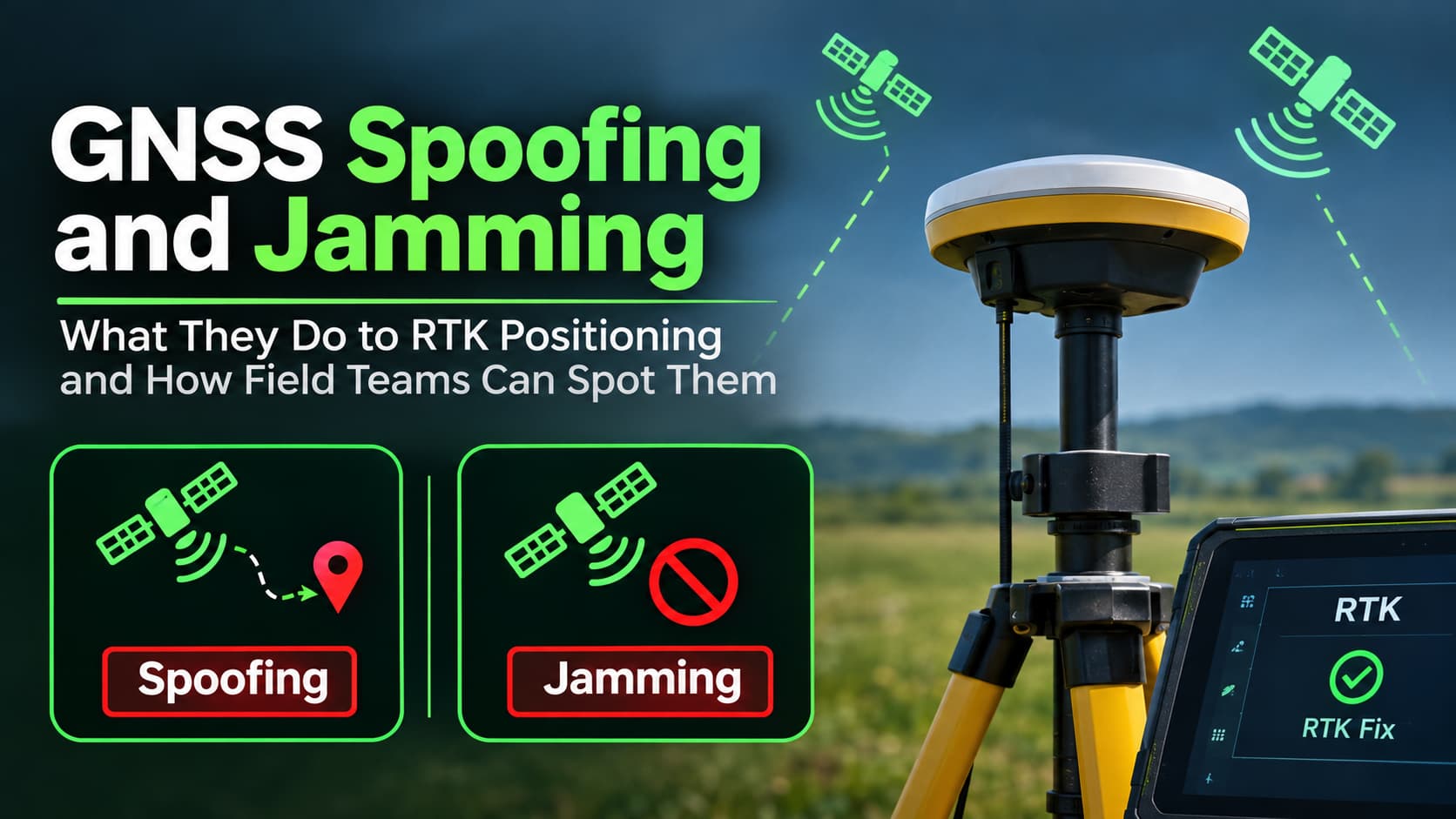
Satellite positioning can fail even when a rover appears normal. Its fixed solution may disappear or its coordinates may disagree with verified control. Obstruction, interference, and spoofing require different responses.
The correction link and the satellite link perform different jobs. According to RTKdata, an NTRIP (Networked Transport of RTCM via Internet Protocol) correction service provider, a rover can receive correction updates even when its antenna still receives disturbed or misleading Global Navigation Satellite System (GNSS) signals. Field teams should therefore evaluate both the receiver measurements and the correction stream before trusting a real-time kinematic position.
How Two Types of Interference Affect RTK
Although both threats affect GNSS equipment, they create very different failure patterns in the field. Jamming typically disrupts satellite reception, whereas spoofing can produce convincing coordinates that are actually incorrect.
Jamming Interrupts Satellite Reception
Jamming adds unwanted radio energy near navigation frequencies. Receivers may lose satellite lock,...
Copyright of this story solely belongs to hackread.com. To see the full text click HERE