

Can You Trace an AI Decision Back to the Data That Created It?
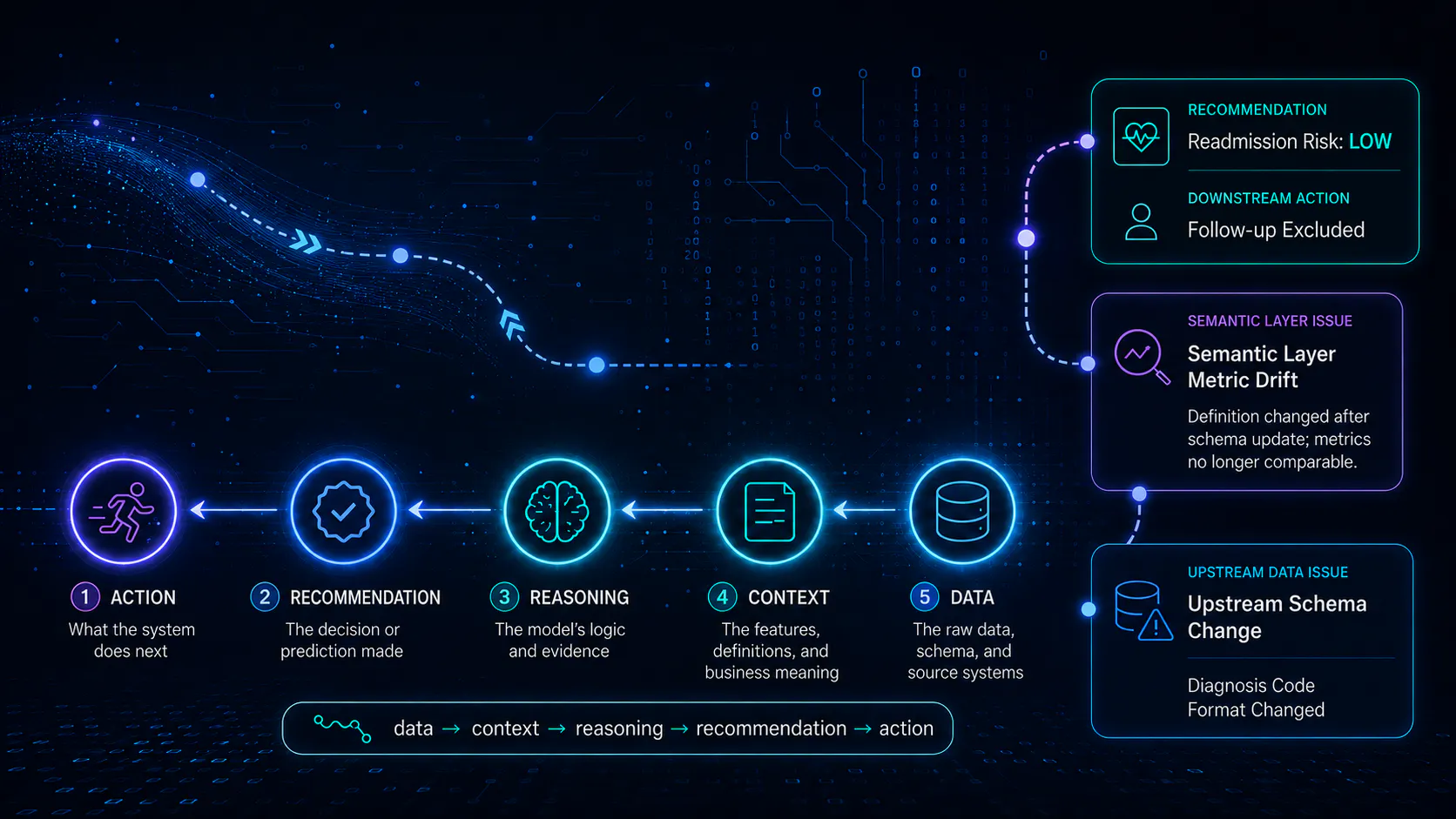
A walk backward through data, context, and reasoning — and why most enterprise AI systems can't survive the trip.
I've spent over a decade building enterprise data and analytics platforms — the kind that sit underneath dashboards, reports, and, increasingly, AI-driven recommendations at large organizations. A few years ago, on a healthcare analytics program, I watched a readmission-risk model quietly flag a batch of patients as low-risk who had no business being scored that way.
The answer wasn't in the model. It was buried four layers back, in a semantic layer metric that had silently drifted after an upstream schema change nobody flagged. And finding it meant walking backward through a chain most enterprise teams never bother to map: data → context → reasoning → recommendation → action.
This is the story of that walk, and why I think every team shipping AI-driven decisions — especially ones built on top...
Copyright of this story solely belongs to hackernoon.com. To see the full text click HERE