

Can Smaller Models Make Multi-Agent Systems Faster and Less Expensive in 2026?
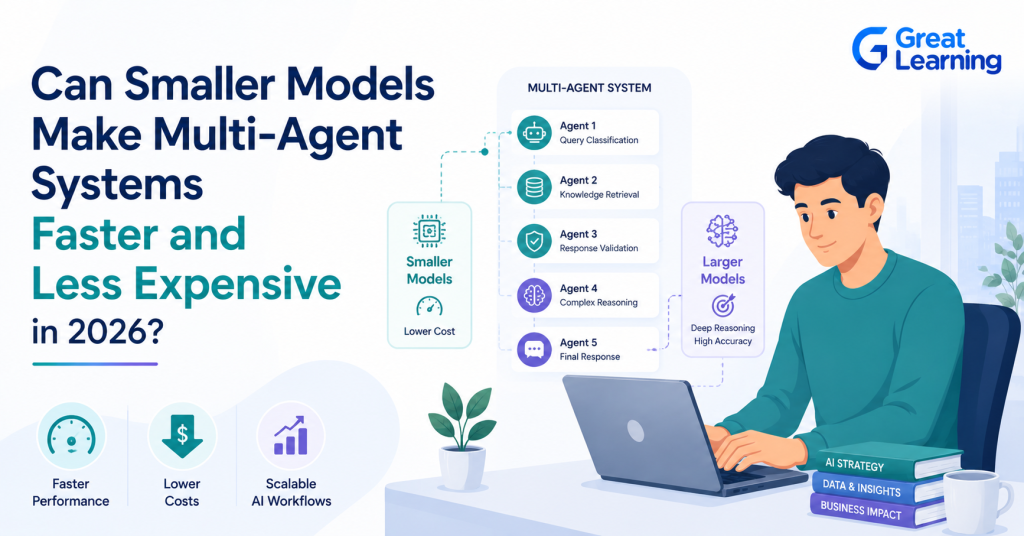
Discover how smaller models improve multi-agent systems by reducing latency, lowering AI costs, and optimizing performance with hybrid AI architectures.
As organizations deploy more AI agents across business workflows, improving performance without increasing infrastructure costs has become a key challenge.
According to McKinsey's State of AI 2025 report, 62% of organizations are already experimenting with AI agents, making efficient multi-agent system design a growing priority.
As adoption increases, organizations are exploring whether smaller models in multi-agent systems can deliver faster responses and lower costs without sacrificing performance.
This article explains how smaller models fit into multi-agent architectures, where they work best, and the trade-offs to consider when building scalable, production-ready AI systems.
What Are Smaller Models in Multi-Agent Systems?
Smaller models in multi-agent systems are lightweight language models assigned to specialized tasks, enabling faster execution and lower costs without relying on a single large model for every decision.
A...
Copyright of this story solely belongs to mygreatlearning.com. To see the full text click HERE