Building Automated Internal Linking Architectures for High-Volume Content Clusters
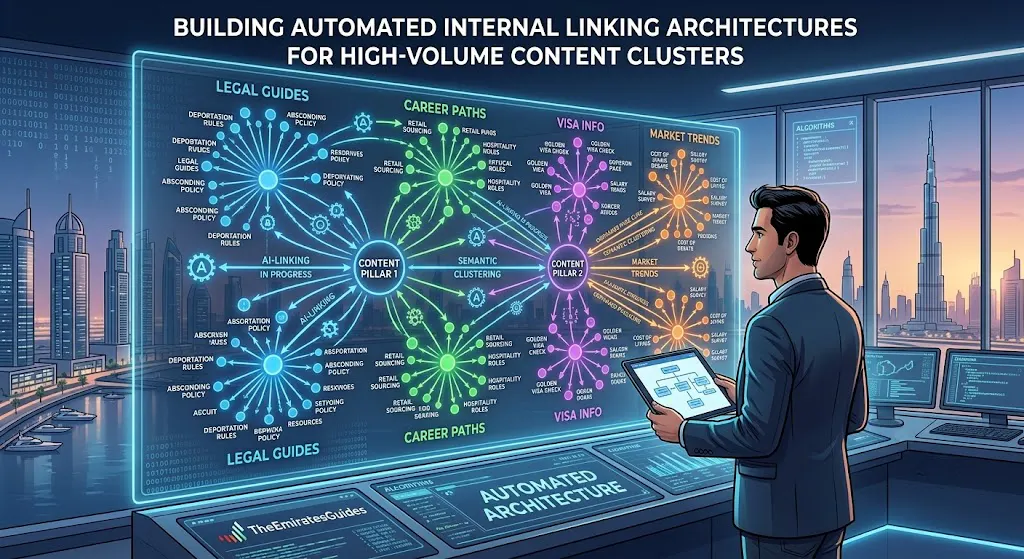
Managing a handful of web pages allows for meticulous, manual curation of internal links. However, when a platform scales to thousands of dynamic pages, manual linking becomes a structural bottleneck. Orphaned pages multiply, crawl depth increases beyond optimal limits, and search engine bots abandon their crawl paths due to poor site architecture.
For platforms handling massive datasets, dynamic directories, or user-generated content, transitioning from manual placement to programmatic, automated internal linking is an engineering necessity. This requires moving away from static HTML connections and building relational mapping systems that generate contextually relevant links on the fly.
Here is a technical breakdown of how to engineer an automated internal linking strategy for large-scale content clusters.
The Architecture of a Semantic Cluster
Before automating anything, the underlying database structure must support semantic clustering. A content cluster is not just a group of links; it is a hub-and-spoke model consisting of a central...
Copyright of this story solely belongs to hackernoon.com. To see the full text click HERE