

Building AI models that understand chemical principles
Among all of the possible chemical compounds, it’s estimated that between 1020 and 1060 may hold potential as small-molecule drugs.
Evaluating each of those compounds experimentally would be far too time-consuming for chemists. So, in recent years, researchers have begun using artificial intelligence to help identify compounds that could make good drug candidates.
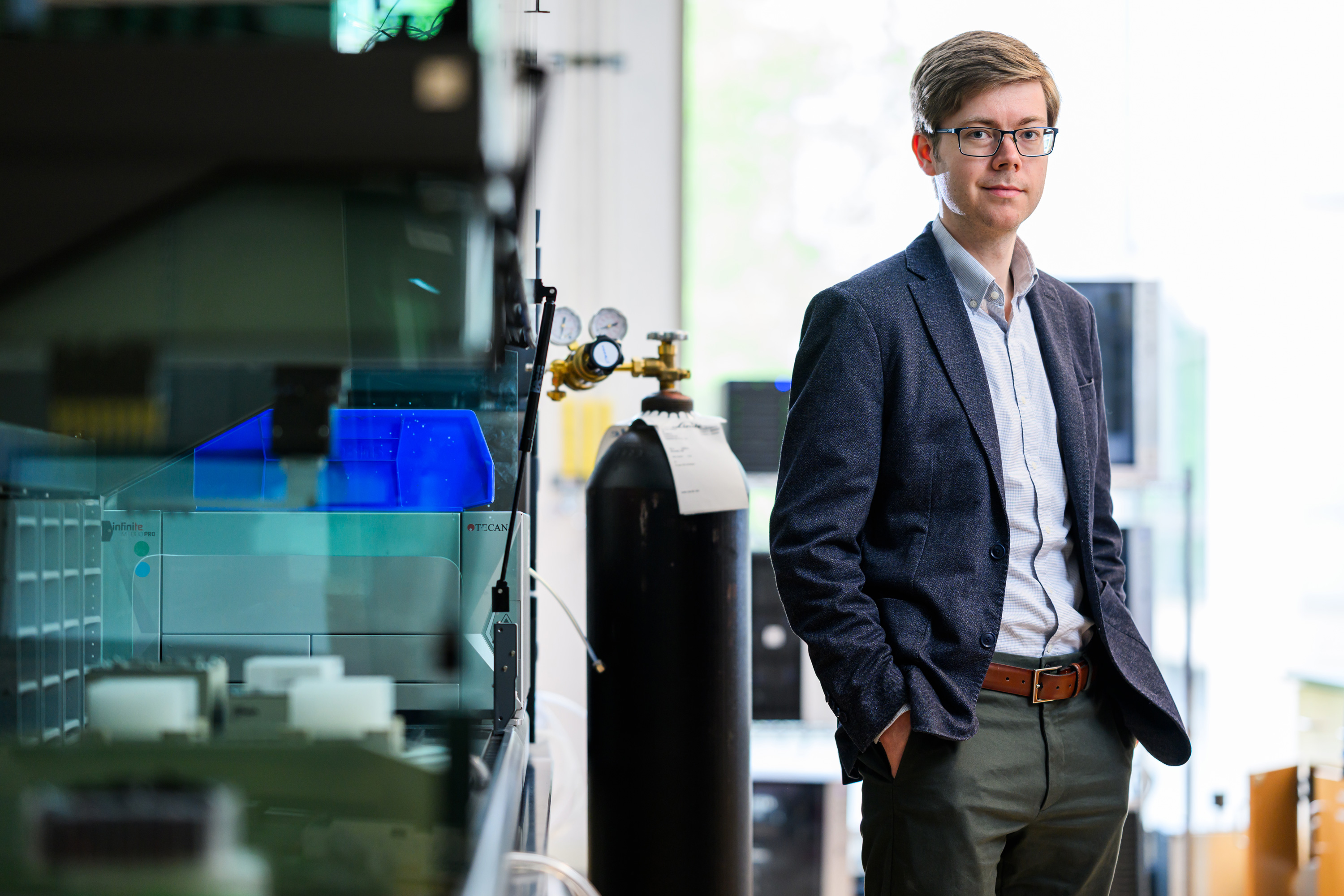
One of those researchers is MIT Associate Professor Connor Coley PhD ’19, the Class of 1957 Career Development Associate Professor with shared appointments in the departments of Chemical Engineering and Electrical Engineering and Computer Science and the MIT Schwarzman College of Computing. His research straddles the line between chemical engineering and computer science, as he develops and deploys computational models to analyze vast numbers of possible chemical compounds, design new compounds, and predict reaction pathways that could generate those compounds.
“It’s a very general approach that could be applied to any application of organic molecules, but the...
Copyright of this story solely belongs to mit.edu. To see the full text click HERE


