

A tritium ‘nuclear battery’ just reached orbit for the first time
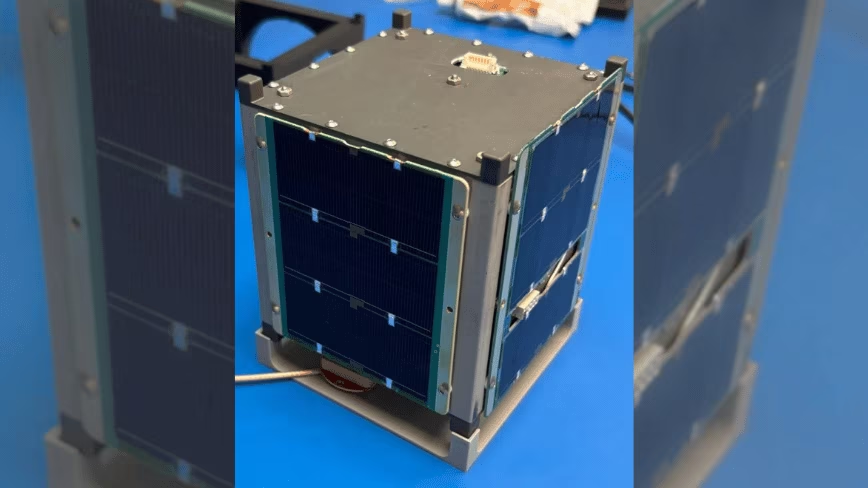
The nuclear age has quietly reached commercial spaceflight. City Labs, a Miami firm, has launched BOHR, which it calls the world’s first commercial nuclear-powered satellite and the first nuclear CubeSat. The craft is about the size of a softball. It flew on a SpaceX Falcon 9 rideshare on 7 July, alongside 80 other payloads, the company announced.
The claim needs a caveat. No reactor powers BOHR. Its satellite bus still runs on ordinary solar panels. The nuclear part, a small “betavoltaic” battery, powers only a payload. The mission aims to prove that battery works in orbit.
How a nuclear battery works
The battery draws on tritium, a radioactive form of hydrogen. As the tritium decays, it gives off beta particles. Those particles strike a semiconductor and knock loose a trickle of electric current. City Labs calls the technology NanoTritium.
The output stays minute, from nanowatts to microwatts,...
Copyright of this story solely belongs to thenextweb.com. To see the full text click HERE