A Heterogeneous Cluster Computing Framework for Modern Distributed Systems
Abstract
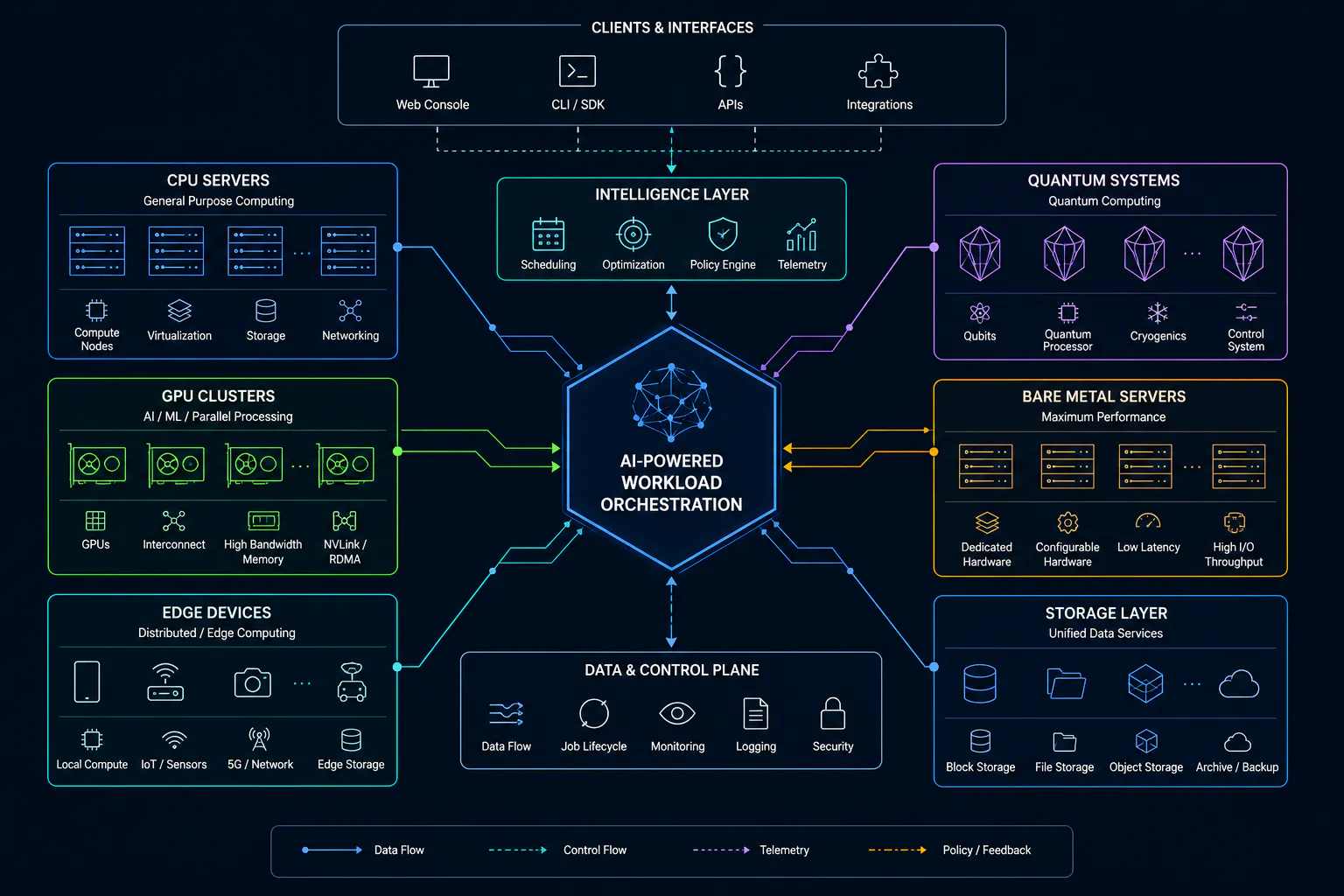
The proliferation of heterogeneous computing environments—spanning different processor architectures, operating systems, and computational capabilities—has created new challenges for distributed computing systems. Traditional cluster computing frameworks often assume homogeneous environments, limiting their effectiveness in real-world scenarios where computational resources vary significantly. This article presents a novel cluster compute framework designed specifically for heterogeneous distributed computing that extends across diverse computational domains, including machine learning, scientific computing, media processing, and edge computing. The framework introduces advanced job orchestration patterns, multi-tier security models, and intelligent resource allocation algorithms that maximize utilization across diverse hardware configurations.
Introduction: The Heterogeneous Computing Challenge
In today's computing landscape, organizations rarely operate with uniform hardware. A typical enterprise might have legacy x86 servers, modern ARM-based processors, GPU clusters for machine learning, edge devices with varying capabilities, and cloud instances with different performance characteristics. This heterogeneity, while providing flexibility and cost optimization opportunities, creates significant challenges for distributed...
Copyright of this story solely belongs to hackernoon.com. To see the full text click HERE