A bold satellite rescue mission came together in record time, but will it work?
Under pressure
“I consider this a success already, just from the fact that we’re even going to try this.”
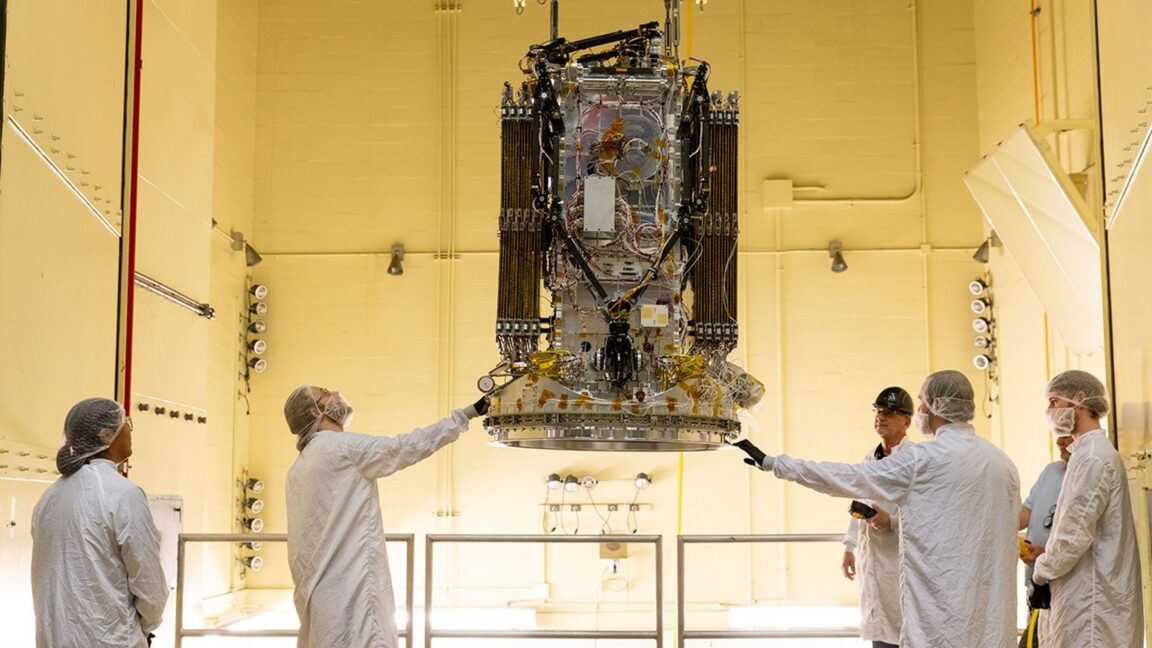
The Link spacecraft developed by Katalyst Space Technologies moves into a vibration chamber at NASA's Goddard Space Flight Center in Maryland on April 15, 2026. Credit: NASA/Scott Wiessinger
WALLOPS ISLAND, Virginia—Just 10 months ago, NASA asked three companies if they could do something nobody had done before. Could they build and launch a satellite to save a $500 million astronomy mission at risk of crashing back to Earth? What’s more, could they do it in less than a year on a tight budget?
Katalyst Space Technologies, a startup founded in 2020, presented the most compelling solution. “They came back with a response that was technically and programmatically plausible, and then we were like, ‘Yeah, let’s do it,’” said Shawn Domagal-Goldman, director of NASA’s astrophysics division.
That was in August of last...
Copyright of this story solely belongs to arstechnica.com. To see the full text click HERE